
Stump Grinding vs Stump Removal: Which Do You Need?
Stump grinding shaves the stump below grade; full removal extracts the entire root system. Cost, mess, and use-case trade-offs explained.
· 5 min read
Two Different Jobs
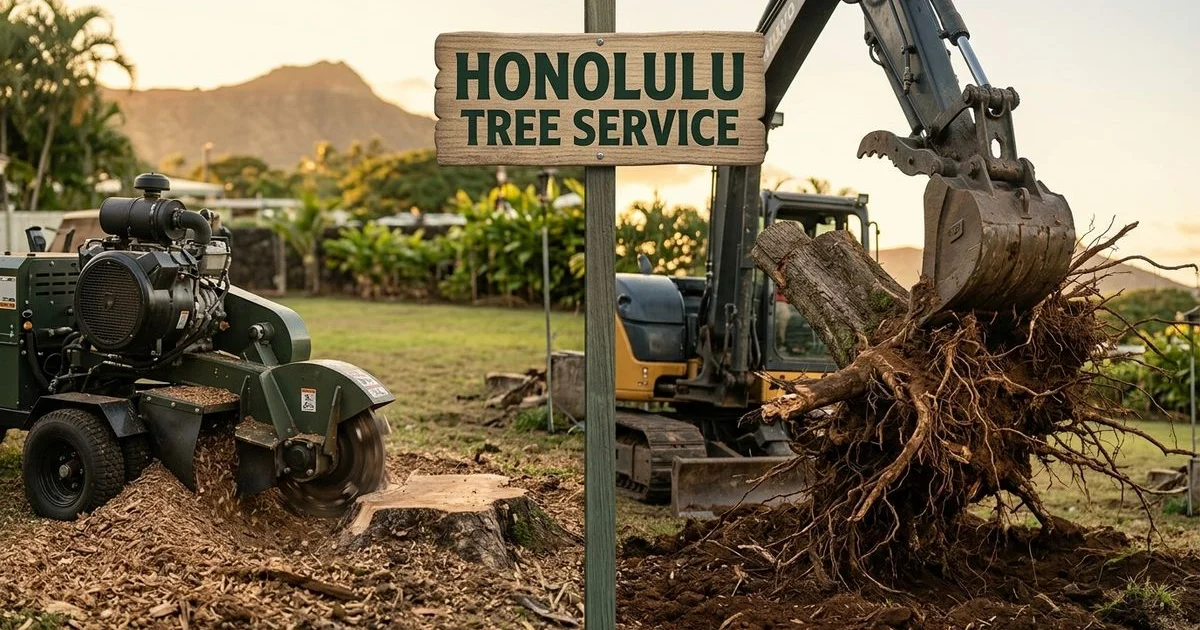
You know how a removed tree always leaves behind a second problem. The stump quickly becomes the next big question for property managers and homeowners comparing stump grinding vs stump removal.
We see this divide all the time.
Two very different approaches solve completely different problems.
Our stump grinding service handles the vast majority of these situations. The second option is full stump removal.
This heavier extraction process is occasionally appropriate. Most of the time, it is simply overkill.
Knowing the difference saves you serious money on jobs that only need a surface cleanup. It also saves you major headaches on construction jobs that require total extraction. Let’s look at the data, what it actually means for your yard, and how to make the right call.
Stump Grinding
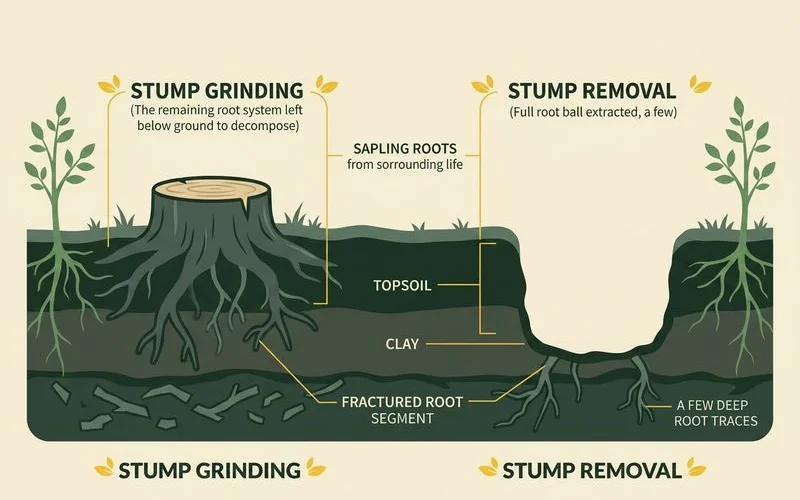
An industrial grinder reduces the stump to wood chips. The stump comes down 6-12 inches below grade. This process also targets surface roots within reach of the machinery.
The Grinding Process
What stays behind is the deeper root system. Roots more than about 12-18 inches deep remain untouched in the soil.
You get a shallow depression filled with wood chips in return. This area is then ready for backfill, grass seed, or general landscaping. The remaining roots decompose naturally over the next 2-5 years.
The 811 Utility Rule
We always require a safety check before firing up the grinder. Buried utility lines often sit just 18 to 36 inches below the surface.
Striking a gas or irrigation line causes massive hazards and expensive repairs. Always call the national 811 hotline two business days before any grinding project. Local utility locators will mark the area with color-coded flags for free.
Ideal Use Cases
Best for:
- Most residential yard stumps
- Stumps where you want grass, sod, mulch, or general landscaping in the area
- Stumps blocking lawn mowing or yard usability
- Multiple stumps you want gone economically
Not best for:
- Replanting a tree in the exact same spot (the root mass is still there)
- Building a foundation, driveway, or hardscape over the spot
- Removing aggressive invasive species like the Tree of Heaven where roots could resprout
Pricing and Value
Our pricing models closely mirror the 2026 national averages. Most providers charge between $2 and $5 per diameter inch for grinding.
A standard residential stump typically costs between $131 and $438 to grind down. Keep in mind that companies usually charge a minimum service fee of $100 to $150 just to bring the equipment out. This approach offers a time-efficient solution with minimal site impact.
Full Stump Removal
An excavator or heavy-duty stump puller extracts the entire stump and root system. Roots are dug or pulled out wholesale.
The Extraction Process
In sensitive areas near utilities, crews might use a hydrovac to safely expose roots before extraction. What stays is some fine root material in the soil, but the main structural root mass is completely gone.
You get a significant excavation hole in your yard. This void needs serious backfilling with topsoil, and the area requires substantial recovery time before you can use it.
When Extraction is Necessary
Best for:
- Construction projects like a new foundation, driveway, or retaining wall over the spot
- Replanting another tree directly in the same spot
- Removing invasive species like Bamboo or Ficus where severed roots actively resprout
- Areas where the root mass tangles with water or sewer utilities
Not best for:
- Standard yard cleanup after a routine tree removal
- Lawn restoration over a former tree spot
- Multiple stumps where project budget is the primary concern
The Financial Impact
We see a sharp increase in price for full extraction. Moving heavy excavation equipment and hauling away massive root balls requires serious labor.
The 2026 national average for full removal ranges from $195 to $609. Large hardwood stumps easily push past $1,000 for extraction. You face higher costs, more disruption, and significantly more spoil dirt to haul away.
The Decision Tree
Will you build over this spot?
- Yes, I need a foundation or driveway: full removal.
- No, I just want open space: grinding.
Will you replant a tree in the same exact spot?
- Yes, right in the same hole: full removal (or grinding plus deeper root removal as a follow-up).
- No, I will plant elsewhere: grinding.
Is the stump in a lawn or general yard area you just want clean?
- Yes, I want to mow safely: grinding.
Is it an invasive species known to resprout from roots?
- Yes, it is aggressive like Bamboo: full removal (or grinding plus follow-up monitoring).
- No, it is a standard native tree: grinding.
Are you trying to keep the project cost down?
- Yes, budget is a priority: grinding.
Our experience shows a clear winner for most local projects. For 80-90% of Oahu residential yard stumps, grinding is the exact right answer. The same logic applies to most suburban yards across the US when weighing grind vs remove stump decisions.
What Happens to the Site After Each
After grinding, you have:
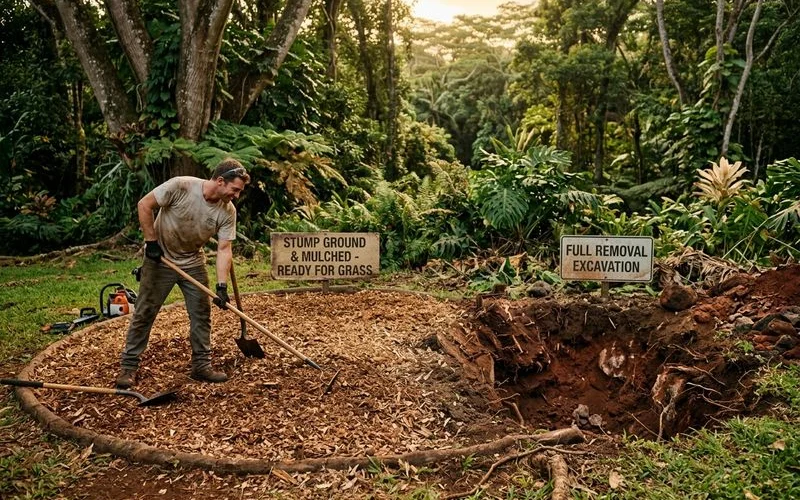
- A 6-12 inch deep depression filled with wood chips
- Some sawdust spread within a few feet of the stump
- Surface roots visible at the perimeter (these can also be ground)
- Recovery to lawn-ready status in days to weeks with proper backfill
We always warn clients about planting grass directly in fresh wood chips. The high carbon-to-nitrogen ratio in decaying wood robs the soil of nutrients. You will need to scoop out some chips and add quality topsoil before dropping grass seed.
After full removal, you have:
- A significant hole (often 2-4 feet deep, depending on tree size)
- A large spoil pile of dirt and roots (which gets hauled or used as rough backfill)
- Substantial soil disturbance across a wide radius
- Recovery to lawn-ready status in weeks to months with significant backfill soil
Cost Differential
Grinding is typically 30-60% of the cost of full removal for the same stump. This massive difference reflects the heavy equipment, intensive labor, and high disposal volume required for extraction.
We track local and national pricing trends to help clients plan their budgets. Here is a quick breakdown of average 2026 market rates for common stump removal options.
| Service Type | 2026 Average Cost | Minimum Site Fee | Best Application |
|---|---|---|---|
| Stump Grinding | $131 to $438 | $100 to $150 | Lawn restoration, standard cleanup |
| Full Removal | $195 to $609+ | $200+ | Construction, invasive species |
These baseline numbers fluctuate based on your region and the specific diameter of the tree. A massive 48-inch oak stump will naturally sit at the very top of these ranges.
Bottom Line
Grind by default. Remove fully only when you have a specific, structural reason. Most property owners pick grinding once they see the practical use cases.
Our crews find that grinding solves the actual problem at hand. It removes the visible stump, fixes the mowing issue, and improves yard aesthetics at a much lower cost than full excavation.
If you are evaluating stump grinding vs stump removal, consider the immediate impact on your landscape. Contact a local utility locator at 811 to mark your lines safely, and then schedule an evaluation with a certified tree professional today.
Common Questions
What's the difference between stump grinding and removal?
Which option is right for me?
Does grinding kill the remaining roots?
Related Guides
How Much Does Stump Grinding Cost?
What drives stump grinding cost on Oahu — diameter, quantity, access, and species. Typical ranges and bundling discounts.
What Happens to the Hole After Stump Grinding?
After grinding, you have wood chips and a shallow depression. Options for backfill, replanting, and final cleanup explained.
Ready for Expert Tree Care on Oahu?
ISA-certified arborists, transparent pricing, and 24/7 emergency response. Get a free on-site quote today.