
What Happens to the Hole After Stump Grinding?
After grinding, you have wood chips and a shallow depression. Options for backfill, replanting, and final cleanup explained.
· 4 min read
The Day After Grinding
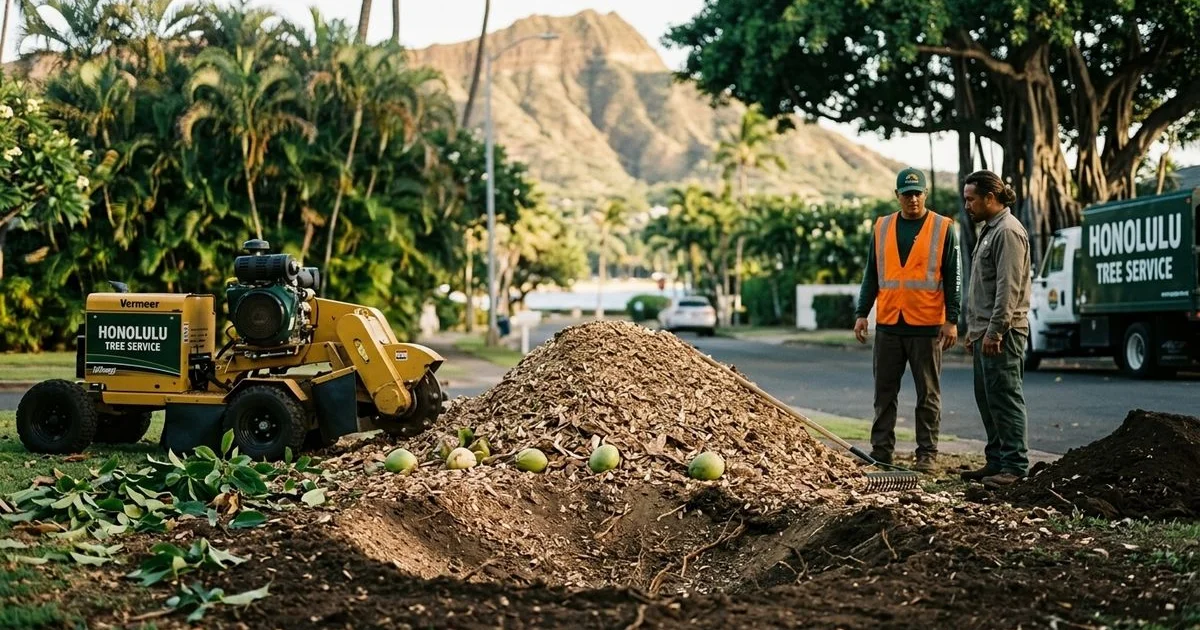
We often hear from property owners who are surprised by what a freshly finished site actually looks like. You know how standard stump grinding jobs leave behind a very specific aftermath.
Our crews always leave a slight depression at ground level, which gets filled with a hefty mound of pale wood chips and a perimeter of fine sawdust. Surface roots within the grinder’s reach are turned to mulch, while deeper roots stay put below grade safely detached from the living trunk.
Let’s look at the data on wood chip decomposition, what it means for your soil, and outline three practical ways to handle the leftover debris depending on what you want the area to become.
Your Three Options
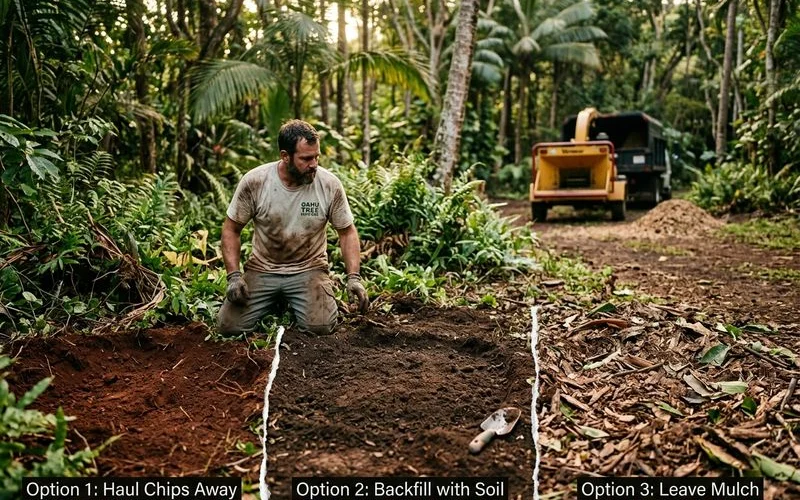
You essentially have three paths for stump grinding hole cleanup: leaving the debris as mulch, filling it with topsoil, or hauling the chips away completely. Each choice impacts your lawn restoration timeline and total project costs.
| Cleanup Option | Best For | Estimated Timeframe | Relative Cost |
|---|---|---|---|
| Leave as Mulch | Wooded corners, garden beds | 6 to 12 months to compost | Lowest (Free) |
| Backfill with Topsoil | Full lawn restoration | 2 to 4 weeks for grass | Moderate ($15-$55/yard) |
| Haul Chips Away | Immediate blank slate | Same-day finish | Highest ($50-$150 fee) |
Option 1: Leave the Chips as Mulch
Leaving the wood chips in place is your quickest and cheapest cleanup method. The mound of chips will naturally compost over a period of 6 to 12 months.
Our team recommends this for tucked-away corners, as the depression slowly levels while the chips break down and the soil settles. Fresh wood chips consume soil nitrogen as they decompose, which makes this spot temporarily poor for new plant growth without fertilizer.
Many property managers spread these chips around the perimeter for landscaping use or leave them in place for a natural mulch bed.
Best for:
- Areas where you do not need a grassy surface immediately.
- Spreading around mature plantings to retain soil moisture.
- Tucked-away corners of a large backyard.
Not best for:
- Spots where you want healthy grass within a few months.
- Areas right next to a formal walkway or hardscape.
- Locations where nitrogen depletion might harm nearby sensitive plants.
Option 2: Backfill with Topsoil
Backfilling the stump hole with topsoil is the standard, most effective option for full lawn restoration. You will need to remove or heavily mix the wood chips, then bring in fresh dirt to fill the depression.
We find that screened loam is the ideal soil type for this job, which currently averages $15 to $55 per cubic yard in the US market for 2026. Grass seed or sod goes directly on top of this fresh layer.
This method ensures a level yard and provides the necessary nutrients for grass to establish in just a few weeks. Our standard service does not include topsoil delivery, but you can request it as an add-on quote or source bags locally for $2 to $5 each.
Process for backfilling:
- Remove the bulk of the chip mound or compact it deeply into the hole.
- Add 4 to 8 inches of clean, screened topsoil.
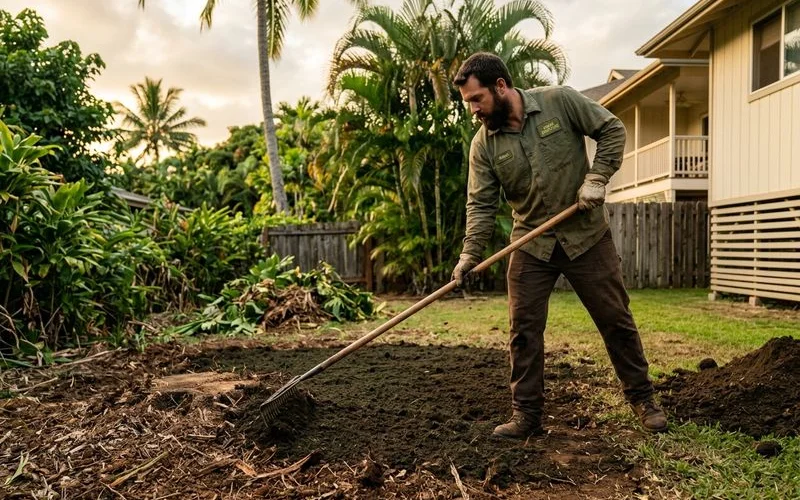
- Rake the surface until perfectly level with the surrounding yard.
- Apply grass seed and water daily, or install fresh sod.
Option 3: Haul Chips Away
Hauling the wood chips away provides the cleanest and most immediate blank slate for your property. The chips and any scattered sawdust are loaded onto a truck and taken off-site, leaving you with an empty depression ready for instant backfill.
We charge a modest add-on fee for this service, typically ranging from $50 to $150 depending on the size of the stump. Many residential homeowners choose this route for highly visible front yards where a large chip mound looks messy.
Leaving a tidy depression allows you to immediately import high-quality soil without spending hours raking out heavy debris.
Best for:
- Visible front yards demanding high aesthetic standards.
- Properties that have absolutely no use for landscaping mulch.
- Commercial sites requiring a pristine finish the same day.
- Projects where immediate replanting is a top priority.
What About the Remaining Roots?
The remaining roots left below the soil surface simply die off and gradually decompose into the earth. Standard grinding equipment goes 6 to 12 inches below grade, which severs the main root mass from the trunk and stops all growth.
We often field questions from concerned property managers about these deep roots causing future foundation or plumbing issues. Without a trunk and leaves, the root system cannot photosynthesize, so it completely stops expanding immediately after the cut.
Hardwood species like oak take roughly 5 to 10 years for their roots to fully decay, while softer woods like pine break down in half that time.
Here are the facts regarding the roots left behind:
- Decomposition timeline: The complete rotting process spans 5 to 10 years depending on soil moisture and tree species.
- Lawn health: Grass and shallow-rooted landscaping plants are not affected, as they establish their own roots entirely above the decaying system.
- Soil settling: You might notice slight ground settling over the first 1 to 2 years as the largest subterranean roots collapse.
- Termite risks: Decaying wood can attract subterranean termites, but isolated roots located safely away from a house foundation rarely pose a structural threat.
Our crews must warn you about a few aggressive species, such as certain bamboo varieties and ficus trees. These specific plants can occasionally resprout from severed roots, requiring full mechanical extraction or chemical monitoring to stop completely.
Can You Replant a Tree in the Same Spot?
You can replant after stump grinding in the same general area, but planting in the exact same footprint requires specialized preparation. The old root system remains heavily compacted in the soil, creating a physical barrier that a young sapling will struggle to push through.
We always recommend offsetting the new planting location by at least 3 to 4 feet from the original stump center. This simple shift gives the new root ball access to fresh, uncompacted soil and essential nutrients.
If your landscaping design absolutely requires placing a tree in the exact same spot, you must inform your contractor ahead of time.
Important replanting guidelines include:
- Deep grinding requirement: Standard grinding is not enough; you will need to pay a premium to grind significantly deeper and wider to clear the planting zone.
- Species selection: Replanting a completely different tree species is generally safe and encouraged.
- Disease carryover: Planting the exact same species is highly risky because soil-borne pathogens, like Armillaria root rot, often survive in the old decaying wood.
- Nutrient competition: The rotting sawdust left behind strips nitrogen from the dirt, so you must heavily amend the backfill hole with high-quality compost.
Our operators can easily accommodate a replant request if we know your plans before firing up the machinery.
What Doesn’t Happen
Your yard will not spontaneously collapse into a massive sinkhole, nor will the dead roots suddenly push through your foundation walls. A common misconception is that a ground stump leaves behind dangerous, unpredictable hazards.
We constantly reassure clients that the post-grinding reality is quite uneventful. A typical 30-inch stump might only cause a minor 1- to 2-inch depression as the organic matter settles over several years.
You can also dismiss a few other common landscaping myths.
Here is what you do not need to worry about:
- Foundation damage: Dead tree roots shrink and wither as they lose moisture; they never expand or crack concrete once detached from a living trunk.
- Spontaneous sinkholes: The soil settling process is incredibly gradual and easily fixed with a quick top-dressing of sand or dirt.
- Home termite invasions: While rotting wood does attract natural decomposers, residual subterranean roots located safely away from your home will not suddenly push a termite colony into your house framing.
- Spreading diseases to grass: The fungi breaking down the deep hardwood roots do not target turfgrass or shallow flowers.
Our experience across thousands of properties shows that nature handles the underground cleanup efficiently on its own.
Bottom Line
After a professional grinding service, you hold total control over how your landscape recovers. You can leave the chips as natural mulch, backfill the stump hole with topsoil for a pristine lawn, or pay a small fee to haul everything away.
We find that most property owners select the backfill method for highly visible front yards and choose the mulch option for tucked-away corners. The remaining root structure hidden underground will safely decompose over the next 5 to 10 years without causing structural damage to your home.
Your final decision simply comes down to your aesthetic goals and immediate planting timeline. Reach out to our local team today to get a precise quote for your tree removal and clean-up options.
Common Questions
What's left after stump grinding?
Can I plant grass or a new tree where the stump was?
Will the remaining roots cause problems?
Related Guides
How Much Does Stump Grinding Cost?
What drives stump grinding cost on Oahu — diameter, quantity, access, and species. Typical ranges and bundling discounts.
Stump Grinding vs Stump Removal
Stump grinding shaves the stump below grade; full removal extracts the entire root system. Cost, mess, and use-case trade-offs explained.

Ready for Expert Tree Care on Oahu?
ISA-certified arborists, transparent pricing, and 24/7 emergency response. Get a free on-site quote today.