
Caring for Native Hawaiian & Tropical Trees on Oahu
Care guide for Oahu's most common trees — monkeypod, plumeria, coconut palm, banyan, mango, and more. Species-specific pruning, health, and risk.
· 7 min read
Why Oahu Tree Care Is Different
You know how most published tree care advice completely fails to account for the unique climate here on Oahu. We see mainland techniques fail on local properties every single week. A 2026 update from the Hawaii State and Private Forestry report confirms that year-round growing seasons push our island’s trees incredibly hard.
High rainfall on the windward side and constant salt exposure on the coast create extreme growth conditions. Mastering native Hawaiian tree care requires a completely different approach than temperate-zone forestry.
Generic advice simply falls apart in an environment where trees grow three times faster than they do in colder states. Let’s look at the specific data for the most common Oahu tree species you will face and explore practical ways to respond.
Monkeypod (Samanea saman)
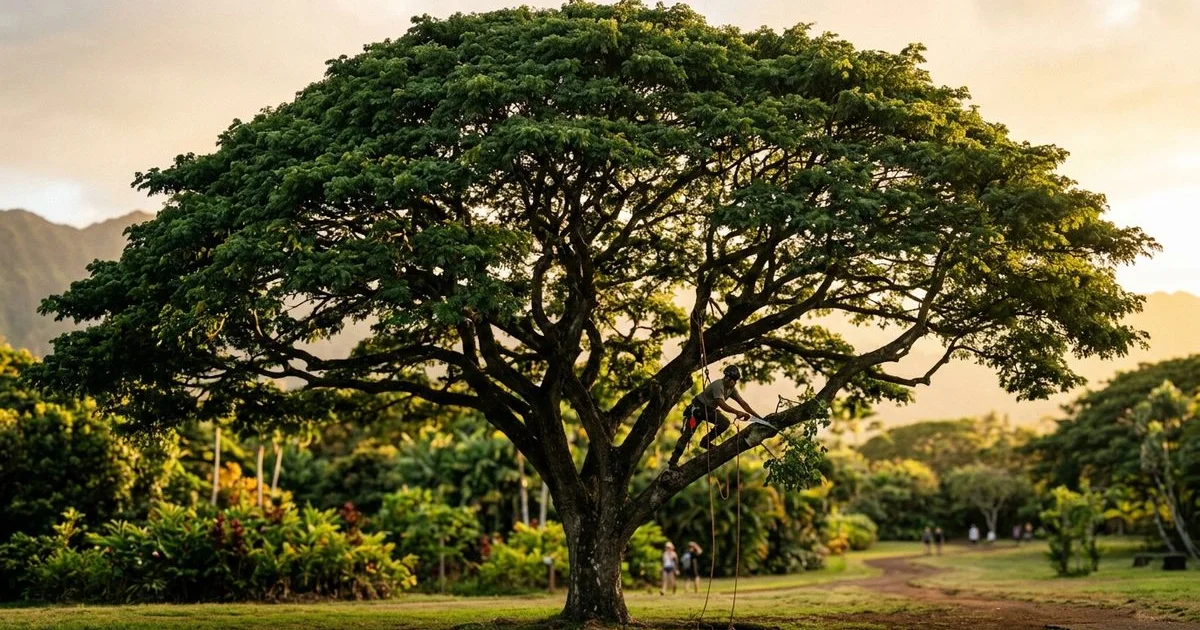
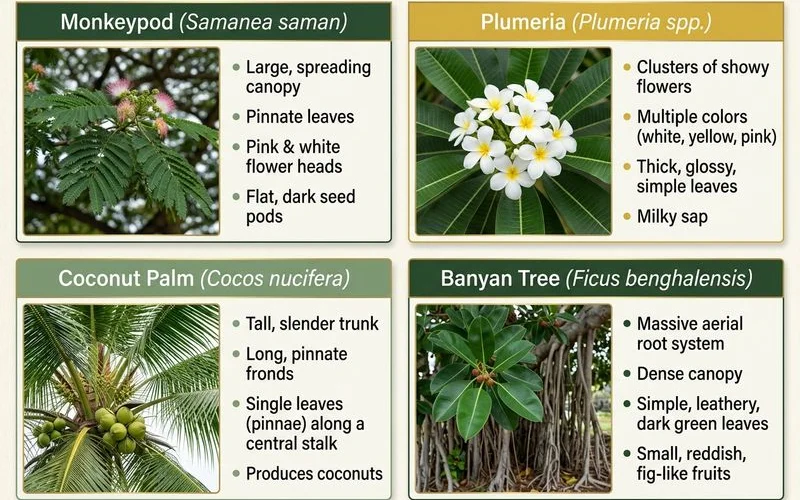
The monkeypod is a massive canopy tree that demands specialized structural pruning to prevent wind-induced branch failure. These iconic trees spread wide and feature rain-tree foliage that folds closed at night. You will spot them everywhere across Oahu from front yards to resort grounds.
We often deal with the heavy lateral branches of these fast-growing giants. A mature monkeypod easily adds 3 to 5 feet of new growth per year. The canopy can expand to over 100 feet in diameter, creating immense wind load risks during winter storms.
To manage monkeypod care effectively, follow these specific guidelines:
- Crown thinning: Reduce the “sail area” every 18 to 24 months to lower the risk of wind failure. See our tree trimming and pruning service for professional help.
- Evaluate co-dominant stems: Stems with included bark frequently split. Get these evaluated by a professional, especially on mature trees exceeding 50 feet in height.
- Protect the root zone: Surface roots will lift concrete hardscapes and lawns. Avoid compacting the soil around the base with heavy construction equipment.
- Benefit from nitrogen fixing: The leaves release nitrogen into the soil as they drop. This natural fertilization process is the reason grass stays remarkably green beneath the canopy.
Plumeria (Frangipani)
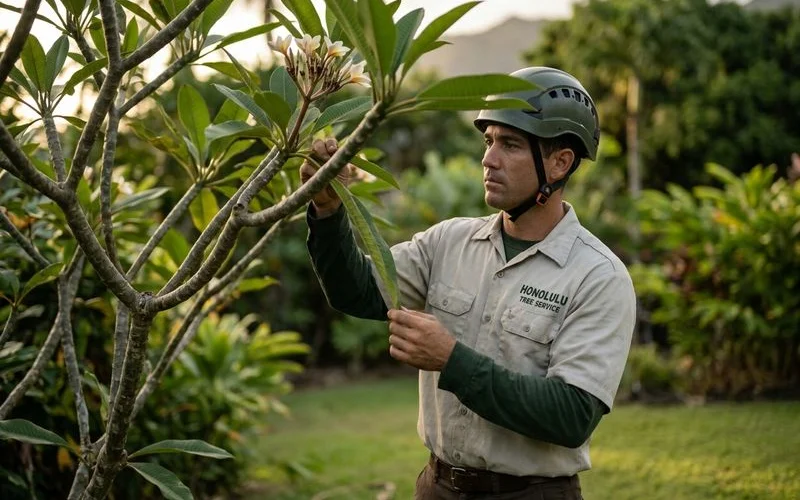
Plumerias are smaller ornamental trees that need light late-winter pruning to maintain their shape without sacrificing those iconic fragrant blooms. Homeowners often plant them near windows or patios for the scent. They remain relatively easy to maintain if you understand their seasonal cycles.
Our crews prioritize structural cuts during the dormant period between December and January. The main blooming season stretches from February through November. Proper timing ensures you never accidentally remove the tips where the next season’s flowers will appear.
Watch out for these common plumeria issues:
- Plumeria rust: This fungal disease (Coleosporium plumeriae) creates orange-yellow spots on the underside of leaves. It remains mostly cosmetic, but treating severe cases prevents premature leaf drop.
- Brittle branches: The soft wood snaps easily in high winds. Pre-storm thinning removes vulnerable crossing branches.
- Stem rot: Overwatering causes the fleshy stems to rot from the inside out. Ensure the planting site has excellent drainage.
Coconut Palm
Coconut palms require aggressive bi-annual maintenance to remove heavy coconuts and dead fronds that threaten property safety. Unmanaged palms present a severe liability risk. Falling coconuts cause severe injuries and costly property damage every single year on Oahu.
We remove hundreds of pounds of dangerous debris from residential canopies each season. A mature, waterlogged coconut easily weighs up to five pounds. Dropping from a height of 40 feet, that weight generates enough force to crush a car roof or cause a fatal injury.
2026 Pest Alert: The invasive Coconut Rhinoceros Beetle (CRB) is now established across the entire island of Oahu. These beetles bore directly into the crown to feed on sap. This damage severely weakens the palm and often kills the plant entirely.
Keep your palms safe with these management steps:
- Schedule regular trimming: Remove coconuts and dead fronds twice a year. High-traffic commercial properties often need quarterly visits. Our palm tree services cover this exact maintenance on automated residential and commercial schedules.
- Avoid over-pruning: Never remove healthy green fronds. This practice stresses the palm and leaves the crown vulnerable to high winds.
- Monitor for disease: Watch closely for signs of lethal yellowing or trunk decay.
Banyan (Ficus benghalensis and relatives)
Banyans are massive trees with complex aerial prop roots that anchor secondary trunks into the ground. These iconic giants dominate older Oahu estates and historic areas like Waikiki. Their incredible size requires highly specialized management and legal awareness.
Our arborists handle these complex structures with extreme care. The aerial roots function as vital structural supports rather than mere decorative elements. Cutting these roots without professional engineering input often destabilizes the entire canopy.
Many large banyans on Oahu fall under the protection of the Hawaii Exceptional Tree Act (Chapter 58). This state law prohibits arbitrary removal or aggressive pruning of designated trees.
| Banyan Care Requirement | Specific Action to Take |
|---|---|
| Legal Compliance | Verify Exceptional Tree status before scheduling any major work. |
| Tax Incentives | Claim up to $3,000 in state tax deductions for certified maintenance costs. |
| Pruning Rules | Focus strictly on structural maintenance. Never top a banyan tree. |
| Root Management | Leave aerial prop roots intact. Guide them away from hardscapes early. |
Mango
Mango trees yield prolific fruit harvests but suffer from heavy lateral branches and highly brittle wood. You will find them dominating backyards in Honolulu, Kaneohe, and Aiea. While the fruit is highly prized, the aggressive growth rate requires constant attention.
We see massive branch failures on unmanaged mango trees every rainy season. The wood simply lacks the flexibility to handle high wind shear when loaded with water weight and heavy fruit. Popular local varieties like the Haden and Pirie need strategic thinning to survive the trade winds.
Protect your mango crop and property by following these rules:
- Thin after harvest: Remove excess inner growth annually. This reduces the wind load and pushes more energy into future fruiting cycles.
- Time your cuts: Never prune during the flowering or early fruit stages.
- Manage Anthracnose: This fungal disease (Colletotrichum gloeosporioides) attacks flowers and fruit during wet years. It thrives in the windward rain. Opening the canopy improves airflow and naturally reduces fungal spread.
Shower Tree (Cassia species)
Shower trees are mid-sized ornamentals that demand conservative pruning to protect their distinct, colorful canopy. The pink and gold blossoms beautifully line many Honolulu streets during the summer months. The Rainbow shower tree (Cassia x nealiae) even serves as the official tree of Honolulu.
Our pruning strategy focuses entirely on minimal structural cuts during the dormant period. Shower trees are highly sensitive to over-pruning. Aggressive cuts trigger chaotic sucker growth and ruin the natural umbrella shape.
Follow these specific maintenance guidelines:
- Adhere to ANSI A300 standards: Keep all cuts clean and minimal.
- Monitor for canker disease: Stressed trees easily develop fungal cankers on the main trunk.
- Clean up dropped pods: The sticky seed pods create slipping hazards on sidewalks and driveways.
Ironwood (Casuarina)
Ironwoods act as tall, dense windbreaks that pose significant snap risks during severe storms due to their brittle upper branches. You will see these narrow trees lining the windward coast and neighborhood borders in Hawaii Kai. They look sturdy, but their internal structure tells a different story.
We frequently respond to emergency calls for shattered ironwood canopies after winter squalls. The dense needle-like foliage acts like a solid wall against the wind. This extreme wind load causes the brittle wood to fail catastrophically.
Keep these risks in mind if you have ironwoods on your property:
- Plant far from structures: Never plant an ironwood within striking distance of a roof.
- Watch the roots: The shallow root systems easily lift concrete driveways and choke out nearby lawn grass.
- Aggressively thin the top: Regular crown reduction allows wind to pass through the dense foliage instead of pushing against it.
Native Species: Koa, Wiliwili, Hala
Native Hawaiian tree care requires highly specialized plans to protect their ecological value and comply with state conservation guidelines. These slow-growing, rare species form the foundation of our cultural landscape. Treating a native tree like a common weed tree is a disastrous mistake.
Our island ecosystems depend heavily on these specific plants for survival. Many native species face unique local threats, such as the Koa wilt disease (Fusarium oxysporum), which rapidly kills off mature Koa trees.
Conservation Warning: Never attempt to self-treat suspected diseases on native Hawaiian trees. Incorrect chemical applications easily contaminate sensitive local groundwater.
Always consult an ISA-certified arborist before pruning or removing any native species. You must also check the city register to ensure the tree does not hold Exceptional Tree status before authorizing any work.
Bottom Line
Generic forestry advice simply will not work for Oahu tree species. The right plan starts with knowing exactly what you have in your yard. You must understand what is normal for that specific tropical tree care profile in Hawaii.
An on-site visit identifies the trees on your property and flags the specific risks associated with the local microclimate.
You need a dedicated native Hawaiian tree care maintenance schedule to protect your property value and ensure family safety. Contact our team today to schedule an expert evaluation and secure your peace of mind.
Common Questions
What trees are common on Oahu?
Do tropical trees need different care than mainland trees?
Which Oahu trees need a permit to remove?
Related Guides
How to Choose a Tree Service Company in Honolulu
A practical checklist for hiring a tree service on Oahu — ISA certification, insurance, written estimates, ANSI standards, and red flags to avoid.
Signs Your Tree Is Dangerous or Dying
Self-diagnose hazardous trees on Oahu — leaning trunks, dead limbs, fungal growth, root damage, and bark issues. Know when to call an arborist.
Tree Care Cost Guide Honolulu
A whole-specialty cost overview for tree care on Oahu — what drives pricing for removal, trimming, stump grinding, and palm work.
Ready for Expert Tree Care on Oahu?
ISA-certified arborists, transparent pricing, and 24/7 emergency response. Get a free on-site quote today.