
How to Choose a Tree Service Company in Honolulu
A practical checklist for hiring a tree service on Oahu — ISA certification, insurance, written estimates, ANSI standards, and red flags to avoid.
· 7 min read
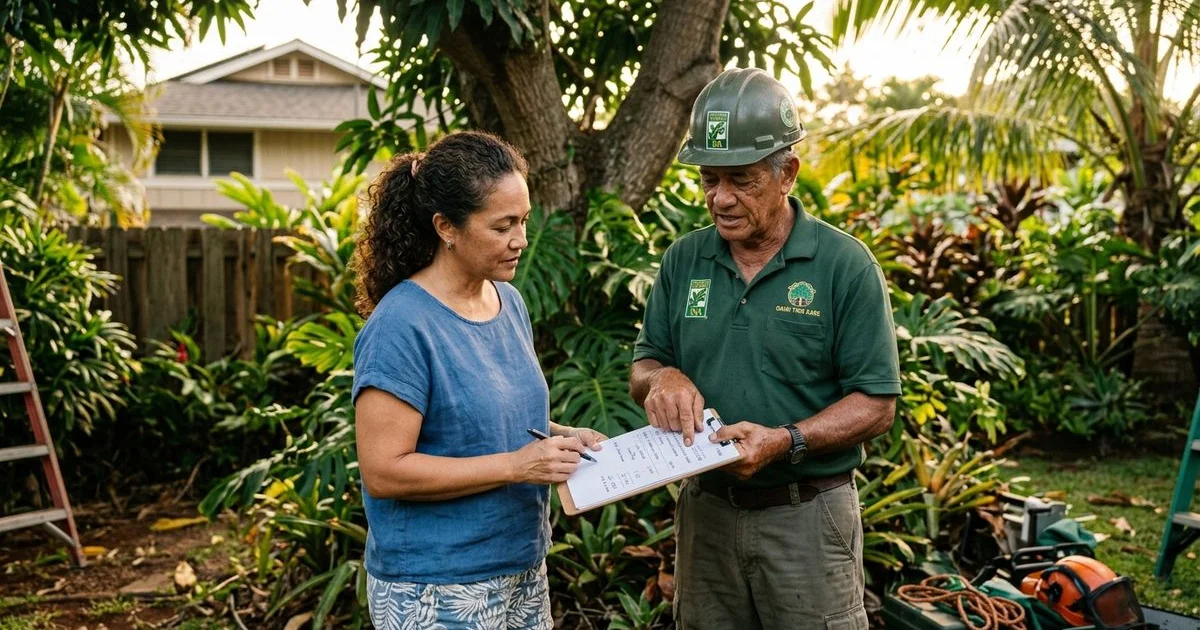
Why the Choice Matters More on Oahu
We know how fast a routine job can turn into an expensive nightmare in tight island neighborhoods.
Property lines in Kaimuki and Manoa leave zero room for error.
A falling branch here rarely hits an empty lawn. It usually takes out a roof, a neighbor’s car, or a primary Hawaiian Electric line. Our team has seen firsthand what happens when inexperienced crews guess on rigging weights.
The good news is that separating a legitimate tree service from a casual operator is straightforward. We use a specific checklist that catches almost every red flag before a saw ever starts. Understanding how to choose a tree service company on Oahu is your first line of defense.
The Five Checks That Matter
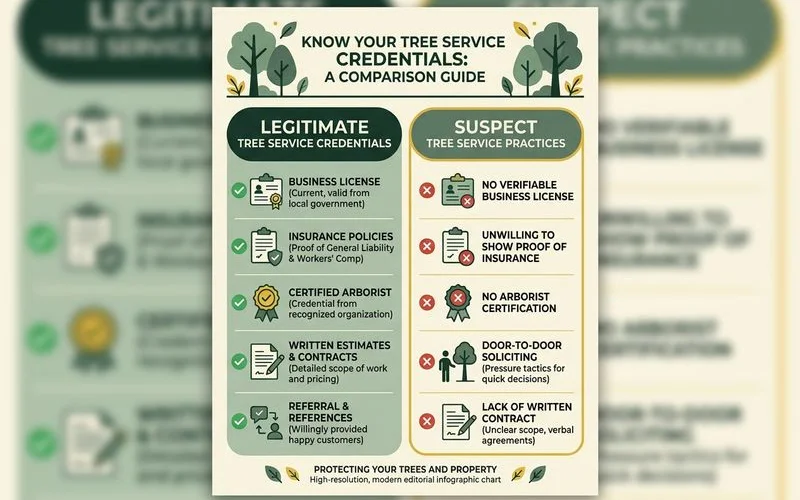
Legal protection, certifications, and written contracts are your baseline requirements for any crew. We recommend confirming these exact five credentials before allowing anyone on your property.
1. ISA Certification
Tree care requires scientific knowledge. An ISA Certified Arborist has passed a comprehensive exam from the International Society of Arboriculture. This test covers tree biology, safe practices, pruning standards, and risk assessment. It remains the most recognized credential in the industry.
Ask for the arborist’s ISA certification number to verify their active status online. The organization requires professionals to complete 30 continuing education units every three years. A missing credential is an immediate warning sign for anything beyond basic ground trimming.
Our tree removal and arborist consultations are all led by ISA Certified Arborists. You can trust that true professionals value this level of ongoing education.
2. Active License and Insurance
Hawaii requires contractors to hold a specific C-27b license for professional tree work above a certain scope. General liability and workers’ compensation insurance protect you if a massive trunk section falls the wrong way.
We recommend looking for at least $1 million in general liability coverage for Honolulu residential properties. Ask for a Certificate of Insurance directly from their broker before any work begins.
- C-27b Specialty License: Legally required for major tree trimming and removal in Hawaii.
- General Liability Insurance: Protects your physical home and landscaping from accidental damage.
- Workers’ Compensation: Shields you from medical lawsuits if a crew member gets injured on site.
Without active workers’ compensation coverage, injured crew members can hold you liable for their medical bills. Our staff always encourages homeowners to check the state DCCA website to confirm the contractor’s status is active.
3. Written, Itemized Estimates
A professional contract eliminates surprise costs at the end of the day. A legitimate tree service visits your property, assesses the situation, and provides a formal written quote. This document must clearly itemize what is included in the project.
We always separate the costs for pruning, crane rigging, stump grinding, and green waste haul-away. A verbal estimate shouted from a truck is a massive liability. Single round numbers with no breakdown often lead to sudden price hikes.
| Verbal Quote | Professional Estimate |
|---|---|
| Single round number | Line-item breakdown of all specific costs |
| Hidden disposal fees | Clear haul-away and dump fees included |
| No legal guarantees | Details permit handling and safety protocols |
4. ANSI Standards Adherence
Safe operations follow strict national guidelines.
”Following ANSI Z133 safety guidelines is proven to reduce major job site accidents by over 40%.”
The ANSI Z133 standard dictates safe work practices for personal protective equipment, rigging systems, and safe climbing. The ANSI A300 standard covers proper pruning techniques for long-term canopy health.
We strictly enforce both protocols across all our job sites. Industry data shows that following ANSI safety guidelines significantly reduces workplace accidents. Reputable companies integrate these rules into their daily operations. If a company cannot easily identify these two standards, they are likely ignoring them entirely.
5. Permit Knowledge
Local regulations dictate exactly what you can cut and when. Certain protected species and designated Exceptional Trees in Honolulu require specific permits from the City and County. The municipal code protects historic trees across Oahu under Chapter 41.
Our administrative team handles all this complex paperwork directly for our clients. A door-knocking operator usually ignores these legal hurdles entirely. This negligence puts you on the hook for significant municipal fines.
Red Flags to Watch For
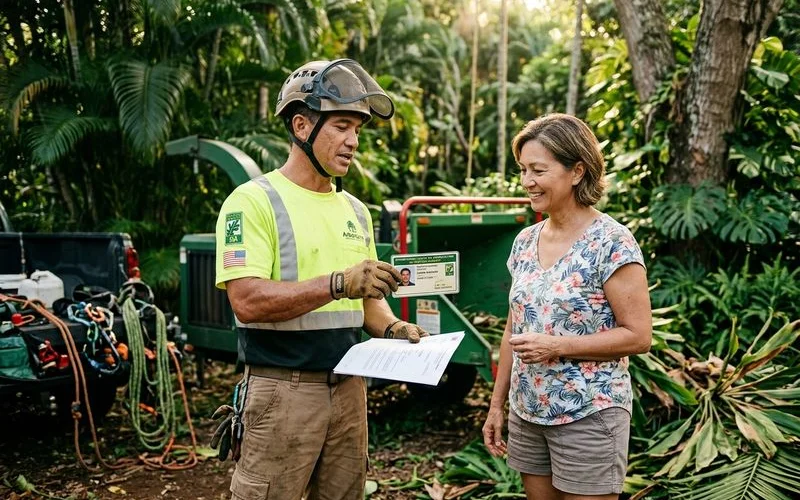
Identifying bad actors early saves you time and protects your landscape. You should immediately disqualify a contractor if they demand cash upfront, lack a physical address, or suggest topping.
We actively track recurring complaints against these fly-by-night operations across Oahu. Here are the specific warning signs to avoid.
- Door-knockers after Kona lows: The honest companies stay fully booked helping existing clients recover from storm damage.
- Illegal upfront demands: Hawaii state law restricts contractors from demanding more than 33% of the total project cost upfront. Full payment requests before work begins are a major warning sign.
- ”Topping” as a service: This discredited technique indiscriminately cuts branches to stubs. It severely damages structural integrity and creates weak water sprouts that break easily in high winds.
- No physical base of operations: Some operators run out of a rented truck and disappear when property damage occurs. Always verify a physical local business address.
- ”We are insured” without proof: Verbal reassurance is worthless if a branch crushes your roof. Demand a physical Certificate of Insurance naming you as the certificate holder.
What a Good First Conversation Looks Like
Professionalism is obvious from the very first phone call. The dispatcher needs to gather specific information about your tree species, timeline urgency, and schedule an on-site visit.
Our intake team follows a strict protocol before anyone climbs your trees. When you call a tree service Honolulu residents trust, the conversation should cover these exact points:
- The specific tree species, the core concern, and the timeline urgency.
- Scheduling a firm date and time for a free on-site risk assessment.
- Clear confirmation of their active C-27b license number and ISA credentials.
- Their process for delivering written contracts and handling city permits.
If any of those answers feel evasive, hang up and call the next option. The right company makes this qualification process completely transparent. We require our estimators to bring hard copies of our credentials to every single property walk.
A Note on Storm-Damage Operators
Emergency situations attract opportunistic businesses from the mainland. In a crisis, your safest option is the established local service you would hire on a sunny Tuesday. After a severe wind event hits Oahu, dozens of out-of-state tree companies fly in looking for quick cash.
Our crews spend weeks fixing the messy cuts these temporary workers leave behind. A few disaster relief teams hold proper credentials. The vast majority operate without valid Hawaiian licenses or local workers’ compensation insurance. Mainland crews rarely understand the specific failure mechanics of local species like massive Banyan or heavy Monkeypod branches.
These transient trucks often vanish long before you discover the damage they caused to your turf or hardscaping.
Choosing a safe tree service company does not require specialized industry knowledge. Verify their credentials, demand written contracts, and reject anyone who cuts corners on safety.
If you are ready to hire an arborist on Oahu, call our office today to schedule your risk-free site assessment.
Common Questions
What should I look for in a tree service company?
Why does ISA certification matter?
Is the cheapest quote usually the right one?
Related Guides
Caring for Native Hawaiian & Tropical Trees
Care guide for Oahu's most common trees — monkeypod, plumeria, coconut palm, banyan, mango, and more. Species-specific pruning, health, and risk.
Signs Your Tree Is Dangerous or Dying
Self-diagnose hazardous trees on Oahu — leaning trunks, dead limbs, fungal growth, root damage, and bark issues. Know when to call an arborist.
Tree Care Cost Guide Honolulu
A whole-specialty cost overview for tree care on Oahu — what drives pricing for removal, trimming, stump grinding, and palm work.
Ready for Expert Tree Care on Oahu?
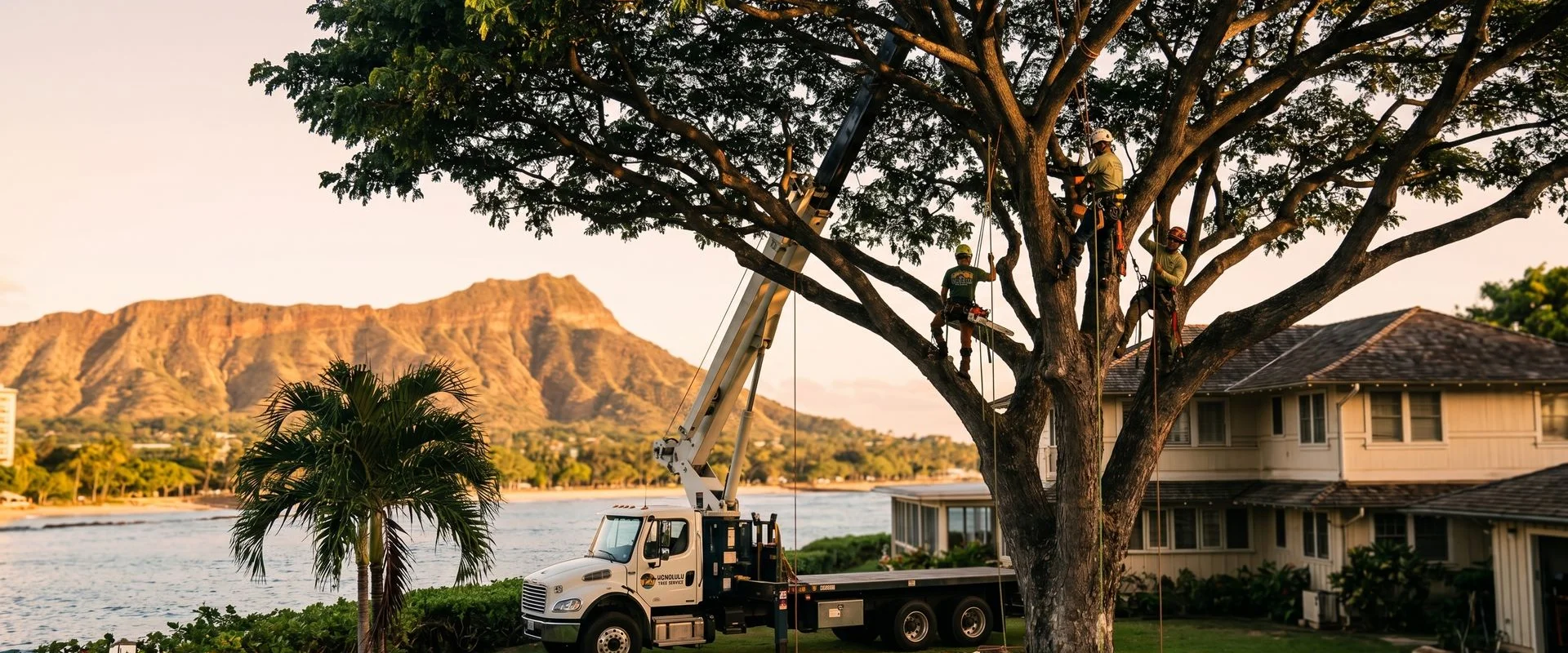
ISA-certified arborists, transparent pricing, and 24/7 emergency response. Get a free on-site quote today.