
Crown Thinning vs Crown Raising: What's the Difference?
Crown thinning and crown raising solve different problems. When each is appropriate, what they do for the tree, and how to ask for the right service.
· 5 min read
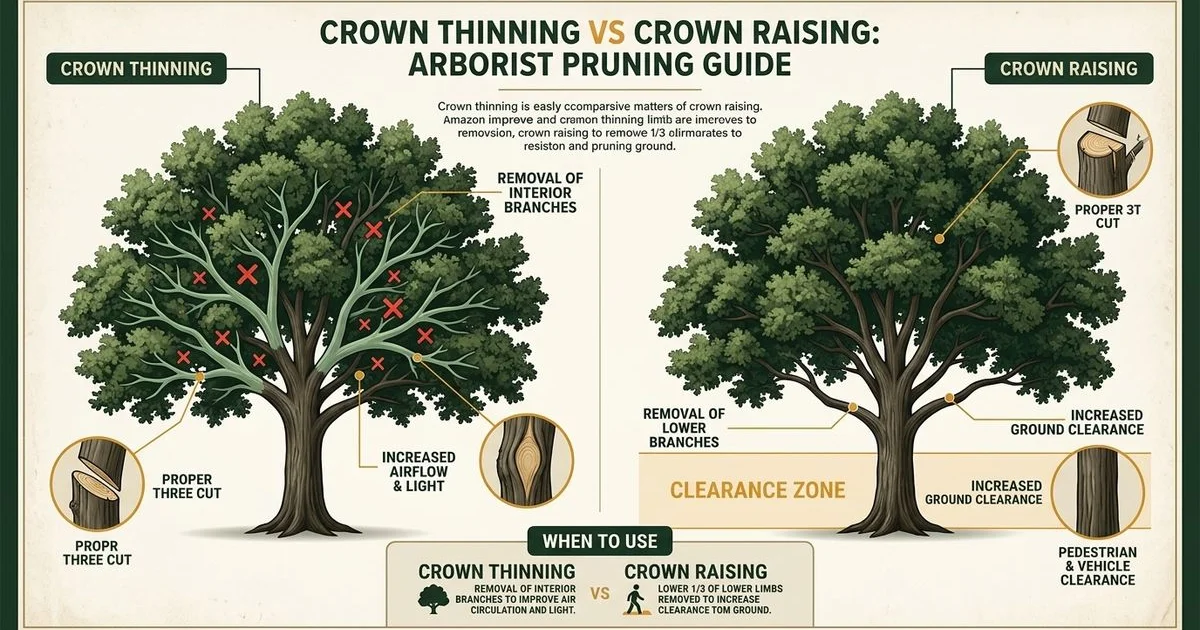
Two Different Operations: Crown Thinning vs Crown Raising
We often hear property managers use “trimming” and “pruning” as catch-all terms. That confusion leads to mismatched expectations and wasted money when trying to understand crown thinning vs crown raising.
Our team relies on the ANSI A300 tree care standards to define these specific operations.
Crown thinning and crown raising tackle completely different problems. We will show you exactly how to identify your property’s needs. If you are scheduling tree trimming and feel unsure about the terminology, the breakdown below clarifies the distinct differences.
| Comparison Factor | Crown Thinning | Crown Raising |
|---|---|---|
| Primary Goal | Reduce density and lower wind resistance | Create vertical space under the tree |
| Visual Result | Maintains original outline, appears more transparent | Exposed lower trunk, canopy base sits higher |
| Industry Standard | Remove a maximum of 25% of live foliage | Maintain a minimum 60% live crown ratio |
| Common Trigger | Heavy storm preparation, poor yard sunlight | Blocked public sidewalks, damaged roof shingles |
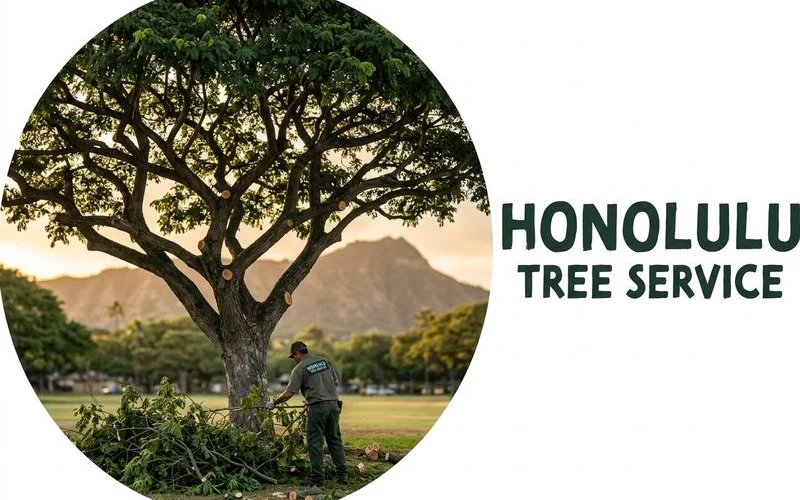
Crown Thinning
Our arborists often have to get crown thinning explained before starting a job. Crown thinning is the selective removal of small live branches throughout the canopy to reduce total density. This technique keeps the original shape of the tree while allowing more light and air to pass through.
We carefully remove inner growth to prevent the canopy from becoming a solid wall against high winds. This approach significantly reduces the “wind-sail” effect during severe storms.
Our team strictly follows the International Society of Arboriculture limit of removing no more than 20% to 25% of live foliage in a single visit. Removing too much canopy triggers stressful, rapid sprout growth and weakens the entire root system.
What it does:
- Allows crucial wind passage to lower the risk of storm failure.
- Filters more sunlight down to grass and landscaping plants below.
- Improves the health of remaining branches by eliminating rubbing or crossing limbs.
- Maintains the natural silhouette without aggressive size reduction.
When to ask for it:
- Your tree canopy has grown dense and blocks out essential yard light.
- Pre-storm risk reduction is your primary goal for the season.
- You notice interior branches crossing and scraping the bark off each other.
- Your mature tree needs a general health-improvement trim.
Frequency: Every 18 to 30 months for healthy mature trees across most US regions.
Crown Raising
Crown raising trees involves removing the lowest branches to lift the bottom edge of the canopy. The main trunk becomes exposed higher up, but the top height remains exactly the same.
Our team performs this service to create safe, unobstructed space underneath large shade trees. Local US city codes often dictate these specific clearance heights. We typically prune to maintain 8 feet of vertical clearance over sidewalks and 14 feet over roadways.
Removing too many low branches at once creates a top-heavy, unbalanced structure. Our goal is to preserve a 60% live crown ratio so the trunk remains sturdy. This biological ratio guarantees the tree retains enough foliage for healthy photosynthesis.
What it does:
- Creates essential clearance over public sidewalks, driveways, and fences.
- Improves property sightlines and general curb appeal.
- Stops low limbs from interfering with lawn mowers or delivery trucks.
- Prevents damp lower branches from resting on roof shingles.
When to ask for it:
- Low branches scrape the top of your car in the driveway.
- Overhanging limbs block the line of sight from street corners or windows.
- The bottom canopy grows downward into hardscapes or pedestrian paths.
- Your landscaping requires a clean trunk rather than a bushy base.
Frequency: Much less often than thinning. Once raised to the correct code height, this cut lasts for years.
What They Have in Common
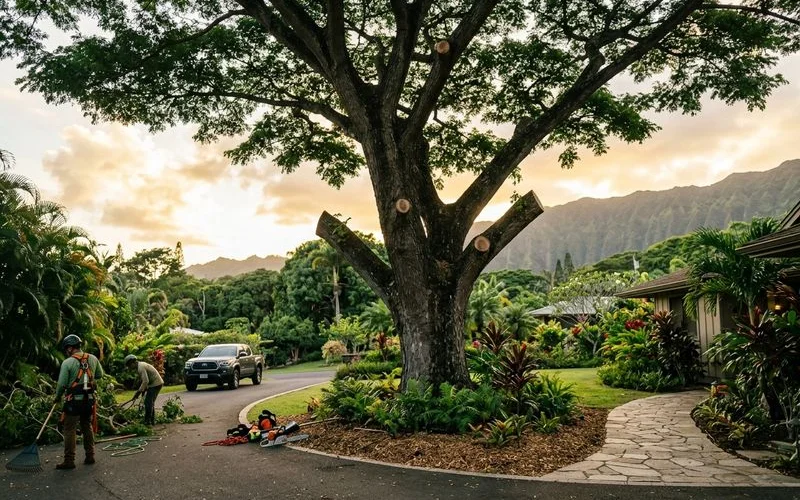
Both operations must strictly follow the updated ANSI A300 pruning standards. Proper execution requires trained arborists to make clean cuts just outside the branch bark collar.
Our crews never leave painful stub cuts or slice flush against the main trunk. These precise cuts allow the wood to heal naturally and seal out disease.
We also refuse to perform discredited techniques like topping or lion’s-tailing. Those harmful practices destroy structural integrity and create serious long-term hazards. A reputable tree service will always focus on preservation instead of aggressive hacking.
Other Pruning Operations Worth Knowing
Beyond thinning and raising, several specialized tree pruning types address different landscape challenges. These targeted methods keep your property safe and visually appealing.
Our recommendations always align with current industry best practices. You should know these specific terms before reviewing a service estimate.
- Deadwood Removal: This targets hazardous, dying, or diseased wood. Safety standards require removing dead branches larger than 1.5 inches in diameter to prevent unexpected property damage.
- Structural Pruning: This involves corrective cuts on young trees to prevent poor growth habits. Fixing weak branch attachments early saves thousands in future storm cleanup.
- Crown Reduction: This shrinks the entire canopy when a mature tree outgrows its location. We execute this using the drop-crotch method, cutting back to a lateral branch at least one-third the diameter of the removed limb.
- Vista Pruning: This opens up specific scenic views through the canopy. Professional selective removal enhances your sightlines without sacrificing the health of the plant.
How to Ask for the Right Service
The best way to ask for the right service is to describe the physical problem in your yard rather than guessing the technical term. Clear communication prevents costly mistakes during your initial consultation.
Our estimators are trained to translate your simple descriptions into formal A300 work specifications. Just point out the specific physical issue you see happening around the property. We suggest using these common phrases to start the conversation. The right phrasing ensures your final contract lists the exact operations required.
- “The canopy feels too dense and blocks the sun.” Request crown thinning.
- “Delivery trucks scrape the lower branches.” Request crown raising to 14 feet.
- “The whole tree is too tall for the power lines.” Request crown reduction.
- “Large dead limbs hang over the patio.” Request deadwood removal.
Your arborist must explain exactly what branches will go and why. Our process includes walking the property together before a single saw starts cutting. A detailed, written plan protects your investment and ensures a stress-free experience.
Bottom Line
When comparing crown thinning vs crown raising, note that thinning makes the canopy less dense, while raising simply lifts the bottom edge. These two distinct operations solve completely different landscape problems.
Our crews often perform both techniques during a single comprehensive visit. Proper care requires strict adherence to industry limits, like never removing more than 25% of the live foliage.
Take note of the specific issues in your yard, and contact a qualified local arborist to schedule an evaluation today.
Common Questions
What is crown thinning?
What is crown raising?
Can both be done in the same visit?
Related Guides
Best Time of Year to Prune Trees in Hawaii
Hawaii's tropical climate changes pruning timing. When to thin canopies for storm season, when to prune for flowers and fruit, and when to wait.
Deadwood Removal: Why It Matters
Dead branches don't just look bad — they're a safety hazard. What deadwood removal is, why it matters, and when to schedule it.
How Often Should You Trim Trees in Hawaii?
Hawaii's year-round growing season changes everything. How often to trim trees on Oahu by species, location, and goal.
Tree Trimming Cost Honolulu
What drives tree trimming cost on Oahu — tree size, canopy density, access, and trimming frequency. Typical ranges and how to compare quotes.
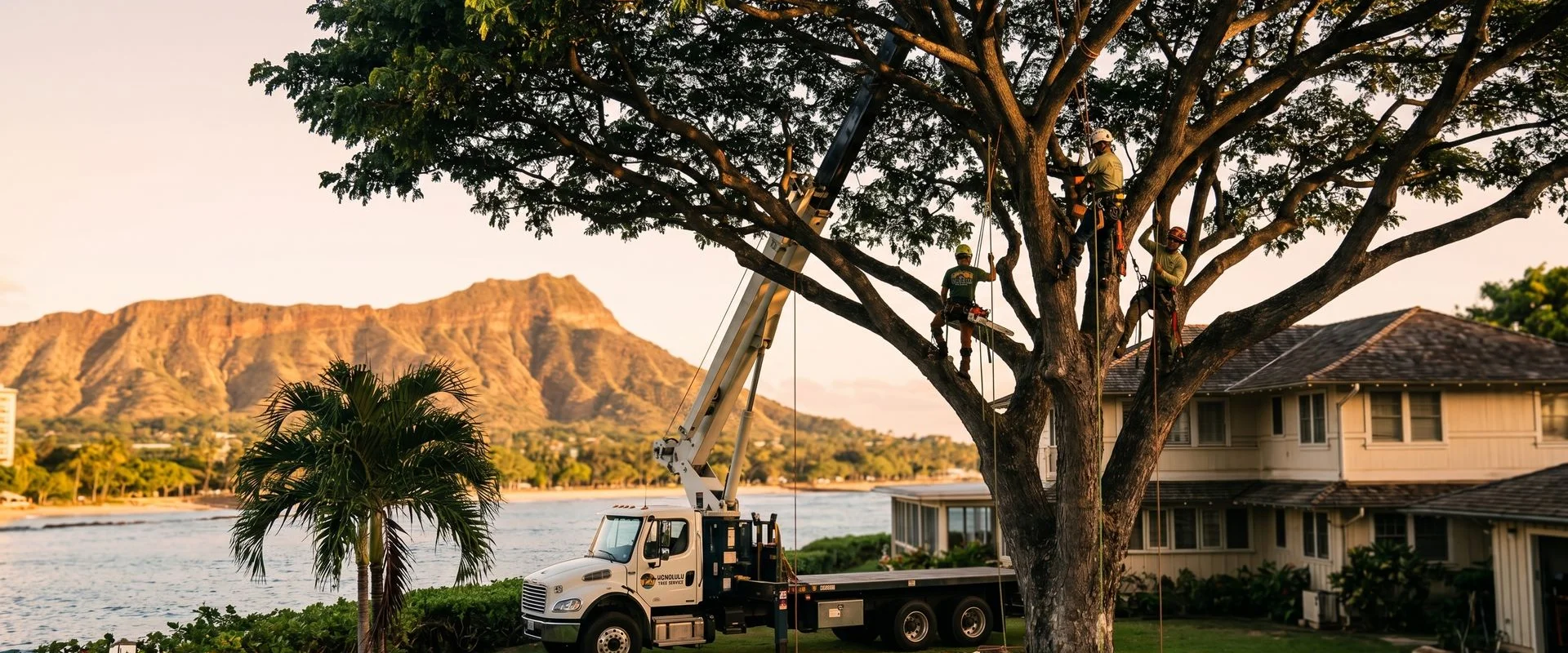
Ready for Expert Tree Care on Oahu?
ISA-certified arborists, transparent pricing, and 24/7 emergency response. Get a free on-site quote today.