
Tree Removal vs Tree Trimming: Which Do I Need?
How to decide between removing a tree and trimming it — when a tree can be saved with pruning, and when removal is the right call.
· 6 min read
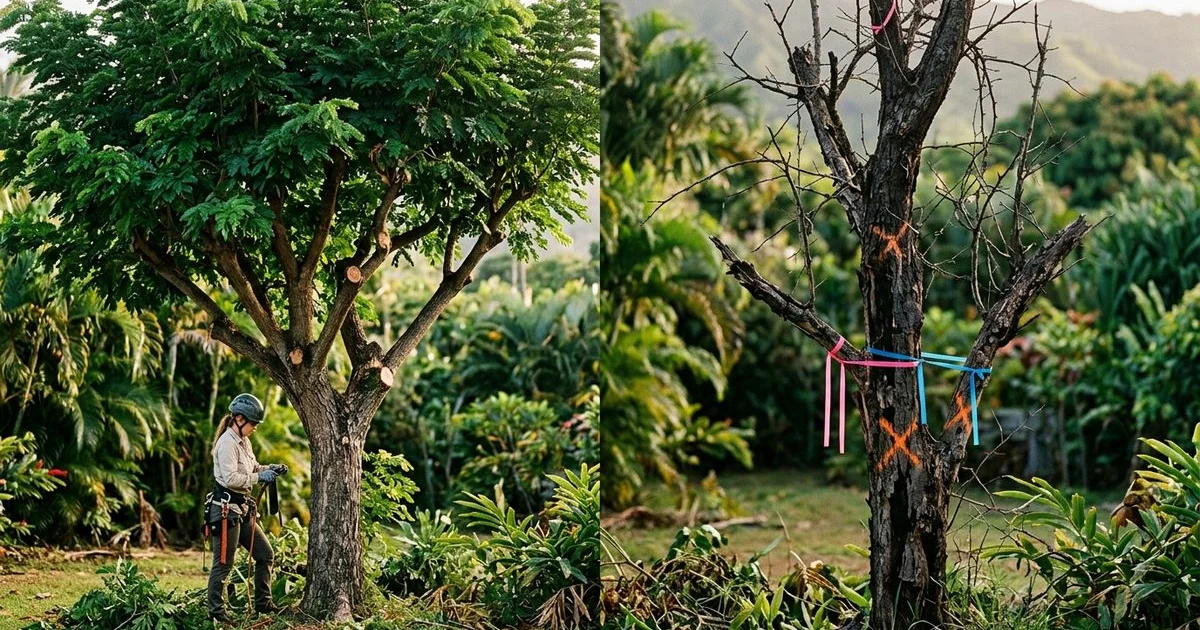
We hear this question every week from homeowners trying to balance a property budget. Cost is usually the first thing that comes up when people compare tree removal vs tree trimming. People often assume that standard maintenance will always be the cheaper, easier fix.
Our team strongly advises against framing the decision strictly around the initial price tag. That mindset often leads to wasted money. Trimming a hazardous, failing trunk just delays a catastrophic failure, putting your family and home at risk.
We know that tree trimming and tree removal are completely different tools meant for completely different problems. Removing a perfectly healthy oak, on the other hand, destroys a valuable asset that the Council of Tree and Landscape Appraisers states can add between $1,000 and $10,000 to your property’s value. The right approach requires evaluating the specific structural risks of your landscaping.
Our goal in this guide is to look at the data, explain what it actually tells you, and walk through practical ways to make the right choice.
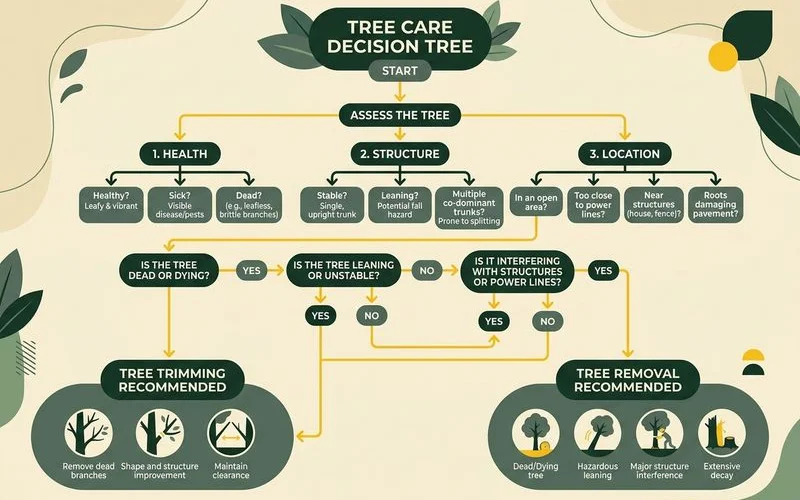
The Wrong Way to Decide
Deciding based solely on the lowest quote is the wrong approach, even though trimming might seem cheaper on paper. The right question is which option actually solves your specific structural or health problem.
Our arborists have watched clients spend hundreds of dollars pruning a dying specimen, only to pay for a full extraction a year later. You should avoid making the choice based on these common, flawed reasons:
- Focusing only on the immediate invoice ignores future expenses.
- We see too many people assuming all diseases can be pruned away.
- Healthy saplings get ignored despite their long-term growth potential.
Pruning a hazardous trunk simply delays an inevitable failure. We always remind clients that cutting down a thriving mature specimen throws away an asset that the USDA Forest Service notes can boost your total property value by up to 10 percent. A mature plant simply cannot be replaced quickly. Evaluating the plant’s health must happen before you even look at the price tags.
When Trimming Is Enough
We consider pruning to be the best solution when a specimen remains structurally sound and reasonably healthy. Trimming is the right call for overgrown canopies, deadwood clearance, or minor storm damage where the main trunk is intact. Proper maintenance can easily add decades to the life of your landscaping.
Our crews follow the American National Standards Institute (ANSI) A300 pruning guidelines to ensure safe, effective results. These regulations specifically state that you should never remove more than 25 percent of a tree’s foliage in a single growing season. Staying within these limits prevents severe stress and allows the plant to recover quickly.
We typically recommend a professional trim for the following situations:
- Overgrown canopy: Crown thinning and structural pruning bring a neglected tree back to a manageable, safe shape.
- Targeted deadwood: Dying branches need extraction when the main trunk remains solid.
- Clearance issues: We use crown raising to safely solve problems with branches hanging over a roof or walkway.
- Localized storm damage: High winds might snap a few limbs while leaving the major root structure completely fine.
- Aesthetic or fruit goals: Shape work and seasonal pruning help maximize next year’s crop yield.
Our experience shows that a healthy 30-year-old oak with an overgrown canopy is not a candidate for extraction. It just needs a careful, compliant trim. Done right, that investment secures the property’s beauty for generations.
When Removal Is the Right Call
We always advise extraction when the trunk itself has become a dangerous, irreversible liability. Removal is the right call for dead specimens, major structural failures, or aggressive, untreatable diseases. Paying to shape a dying canopy is simply throwing good money after bad.
Our crews regularly handle cases where pests have completely compromised the structural integrity. In the United States, the Emerald Ash Borer has caused a 99 percent mortality rate in infested ash species. Once that specific borer takes hold, chemical treatments often fail, making rapid extraction the only safe option.
Our teams strongly suggest full removal when you spot these critical warning signs:
- Advanced decline: The trunk is entirely dead or dying rapidly, with no chance to save it.
- Major structural failure: Massive trunk splits, visible root failures, and large cavities indicate severe danger.
- Hazardous location: We constantly see roots destroying foundations or branches tangling in main power lines where pruning cannot create adequate clearance.
- Untreatable pest pressure: Diseases like Oak Wilt or infestations like the Emerald Ash Borer often leave the plant as a falling hazard.
- Severe storm damage: Hurricanes and ice storms can split the main trunk down the middle or rip away more than half the canopy.
Our arborists know that trimming trees in this category completely wastes your budget. Taking the whole thing down is the only responsible answer to protect your home. Marking the removal points clearly avoids any confusion on the job site.
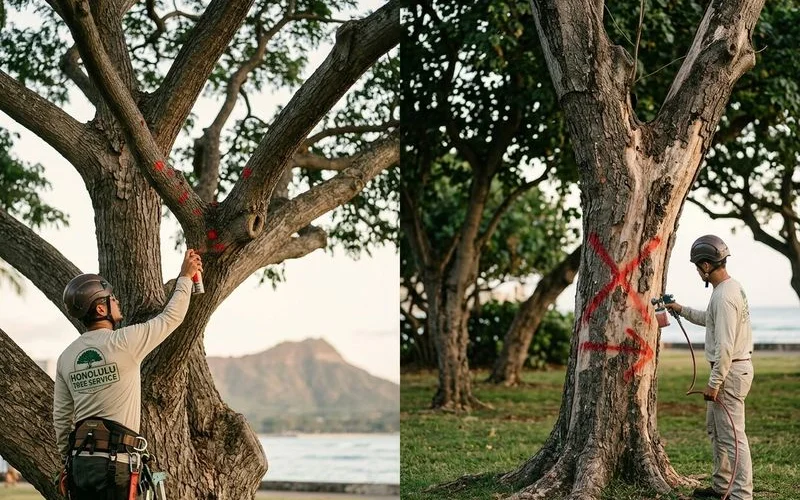
The In-Between Cases
We encounter plenty of borderline situations where the plant shows some decline but is not acutely dangerous. For middle-ground cases, the right approach is usually hiring an expert to conduct a formal risk assessment. You should never guess about internal rot or root stability when a large tree sits near your house.
Our diagnostic process relies on advanced technology to see exactly what the naked eye misses. Professionals use tools like a Resistograph or sonic tomography to detect hidden decay inside a seemingly solid trunk. These specific tests provide hard data on whether the structure can withstand the next major windstorm.
We recommend following this exact process for any questionable specimen:
- Get an ISA-certified arborist assessment. Pay for a professional consultation with an arborist who holds a Tree Risk Assessment Qualification (TRAQ).
- Decide based on the data. Taking a tree down now while the standard rate is lower makes sense if the decline is past recovery.
- Document your decision. We insist on setting a strict follow-up schedule for an annual re-inspection if you choose to preserve a borderline specimen.
A small structural issue can quickly turn into a crushed roof if ignored. Monitoring the situation ensures you stay ahead of any dangerous changes. Our team stresses that you cannot just cut a few branches and walk away without a long-term plan.
The Cost Math: Tree Removal vs Tree Trimming
Depending on access and difficulty, a standard trim usually costs 30 to 70 percent less than a full extraction for a similar-sized specimen. Current 2026 data shows the national average for a standard removal ranges from $800 to $2,000, while a typical trim runs between $400 and $800. We know that budget plays a massive role in every landscaping decision.
A direct cost comparison is incredibly misleading if you do not factor in long-term results. Emergency jobs incur massive premium fees that quickly drain your bank account. Our billing history proves that trying to save a few bucks upfront can easily double your final expense.
Homeowners often fall into common financial traps when avoiding necessary maintenance. A low initial quote can hide the true expense of a failing tree. We ask property managers to consider these specific scenarios before making a choice:
- Bad trim today plus removal in two years: This path costs far more than just taking the tree down immediately.
- Trimming a structurally compromised tree: This approach does not fix the internal structure, meaning you are paying twice for the exact same problem.
- Emergency removal after failure: We see weekend storm responses easily cost $1,100 to $3,000 or more, and there is usually severe property damage involved.
Cost comparisons only work after you confirm which option actually solves the core issue. If both methods guarantee safety, absolutely take the cheaper route. We always say that if the cheap option fails to fix the problem, the right answer is the one that permanently eliminates the risk.
Bottom Line
The final decision between tree removal vs tree trimming simply comes down to the structural health of your landscaping.
You should trim trees that are basically healthy and remove trees that pose a severe risk. We strongly encourage you to get an ISA-certified arborist to make the call when the right path is not obvious.
A low trim quote should never convince you to keep a tree that should come down. An aggressive removal quote should never push you to cut down a tree that just needs careful pruning.
We are ready to help you protect your property and your family, so contact a certified professional today to schedule your formal risk assessment.
Common Questions
Should I remove or just trim my tree?
Can a dying tree be saved by trimming?
How much cheaper is trimming than removal?
Related Guides
Do You Need a Permit to Remove a Tree in Honolulu?
Honolulu tree-removal permits explained — Exceptional Trees, protected species, and what the City & County requires before any work begins.
Emergency & Storm-Damaged Tree Removal
What to do when a tree falls or splits in a storm — safety steps, when to call for emergency response, and what 24/7 dispatch looks like on Oahu.
How Much Does Tree Removal Cost in Honolulu?
Tree removal cost breakdown for Honolulu — what drives pricing, typical ranges by size, when a crane changes the number, and how to get an accurate quote.
Large Tree Removal with a Crane
When crane-assisted tree removal is the right call — large trees, tight lots, near-line work, and what the process looks like on Oahu.
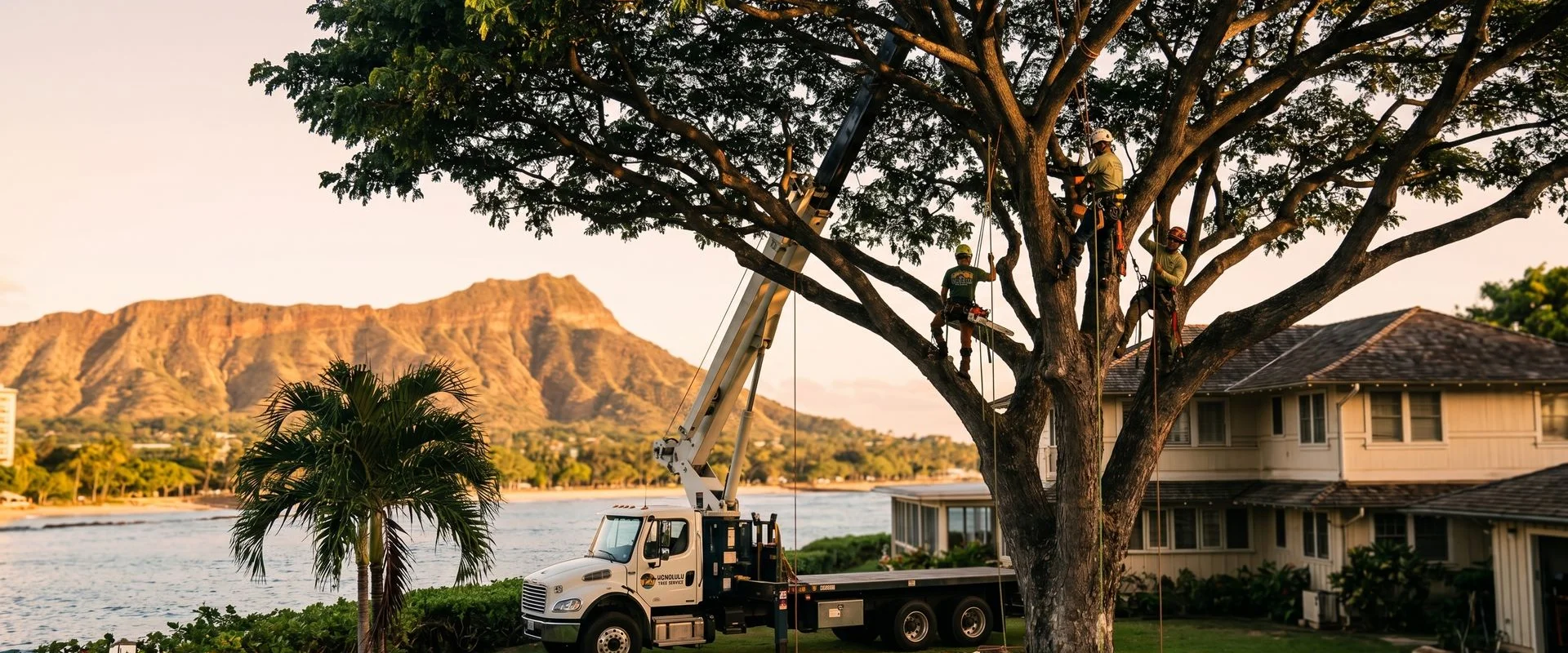
Ready for Expert Tree Care on Oahu?
ISA-certified arborists, transparent pricing, and 24/7 emergency response. Get a free on-site quote today.