
What Does an ISA Certified Arborist Do?
ISA Certified Arborists are trained tree-care professionals. What the credential means, what they do, and why it matters when hiring tree work.
· 5 min read
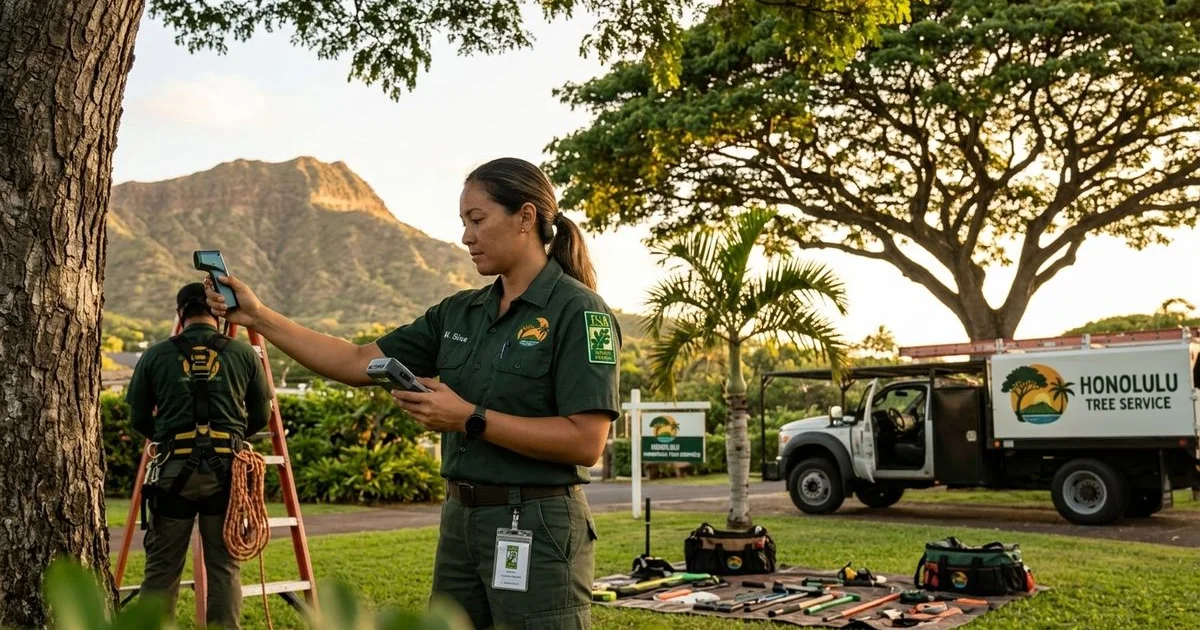
From what we see in the field every day, tree care is often misunderstood as simply cutting branches. Property managers and homeowners face a real challenge balancing aesthetics with safety.
You might wonder what separates a true expert from a guy with a truck. The dividing line is formal education and proven competence.
We are going to explain exactly what this ISA certified arborist credential guarantees, the same expertise behind every arborist consultation we provide. This guide breaks down the specific skills you pay for and how they protect your property.
What ISA Certification Means
ISA stands for the International Society of Arboriculture, the leading professional body for tree care globally. An ISA Certified Arborist is the credential awarded after passing a comprehensive exam covering biology, pruning, and safety.
Our team relies on ISA standards to ensure every job meets strict scientific guidelines. Candidates must document at least three years of full-time, practical arboriculture experience before taking the 200-question test.
To stay certified, these professionals must complete 60 continuing education credits every three years. This rigorous process tells you exactly what kind of person shows up at your property:
- They have formal training in how trees actually work as biological systems.
- They know proper pruning technique (ANSI A300) and safe work practices (ANSI Z133).
- They can diagnose common tree health and risk issues.
- They commit to a professional code of ethics.
- Their knowledge is verified through standardized examination, not self-reported claims.
As an ISA arborist Hawaii residents trust, our crews understand that this credential is the difference between a tree care professional and someone who simply owns a chainsaw.
What an Arborist Actually Does on a Job
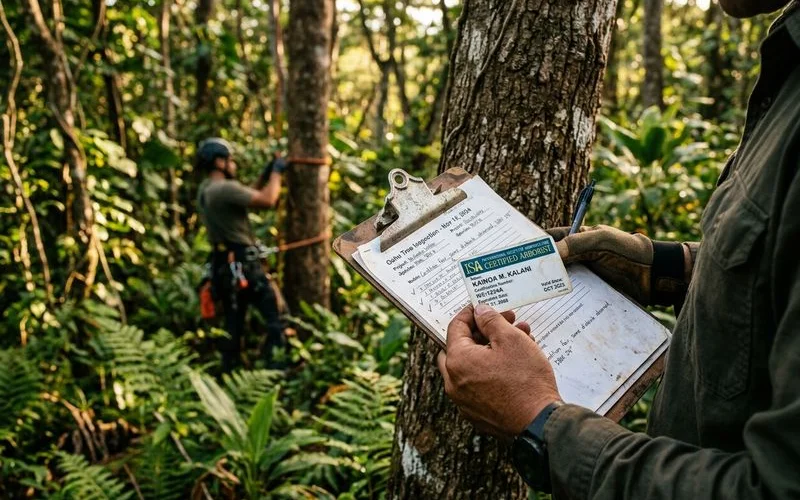
Every tree care visit requires a systematic approach to assess, diagnose, and treat plant health. On a typical residential or commercial site, the arborist follows a strict process from inspection to work execution.
We handle these site visits by focusing heavily on structural analysis. Here is what happens during an assessment:
- Assesses: Walks the property and inspects each tree, checking structure, health, and risk.
- Diagnoses: Identifies what is going on with each tree: healthy, declining, hazardous, treatable disease, or structural defect.
- Recommends: Proposes the right operation: prune, treat, monitor, or remove.
- Plans: Develops the work plan, including safety, equipment, and timing.
- Performs or oversees: The arborist either does the work directly or supervises a trained crew.
- Reports: For consultation visits, produces a written report with findings and recommendations.
On our arborist consultation visits, the formal report is the final deliverable. This paperwork is vital for managing local regulations.
For example, a certified arborist Honolulu property owners hire must manage the Exceptional Tree Program guidelines for protected species. You need a documented assessment to get approval for pruning these historic trees.
On removal or pruning visits, the report is more informal. The exact same expertise drives the operational decisions on those jobs. High winds pose a massive threat to brittle species like Albizia trees. An expert spots these weak points before a storm hits.
Why ISA Certification Matters for Hiring
Tree work consistently ranks as one of the most hazardous trades in the United States. Hiring a certified professional protects your property from severe damage and shields you from massive liability.
Our industry sees a fatality rate of roughly 100 per 100,000 workers annually. Improper cuts kill trees.
Improper rigging damages houses and vehicles. Improper assessment misses fatal hazards hidden in the canopy.
The Financial Risks of Bad Tree Care
Hiring an ISA-certified arborist drastically reduces the risk of expensive mistakes. A single botched removal can cost a homeowner thousands of dollars in roof repairs. Here is how certification protects your investment:
- Bad pruning that damages trees long-term. Topping, lion’s tailing, and other discredited techniques violate the 2024 ANSI A300 standards. Certified arborists refuse to do them.
- Misdiagnosis of tree health. A sick tree treated wrong dies. A healthy tree misdiagnosed gets removed unnecessarily. Both errors cost money.
- Unsafe work practices. ANSI Z133 mandates safe climbing, rigging, and ground operations. Certified arborists strictly follow these rules to prevent accidents.
- Bad advice on save versus remove decisions. A certified expert uses plant biology to tell you when a tree can be saved. They do not base decisions on what generates the highest invoice.
Beyond the Basic Certification
It’s not the only credential that matters for a property owner. Insurance and state licensing also play a huge role in protecting your liability.
We always verify our liability coverage before starting any chainsaw. However, ISA certification remains the most recognized signal of professional tree knowledge.
Different ISA Credentials
The ISA offers several specific credentials to match different specialties in the field. From general maintenance to high-risk analysis, there is a distinct qualification for every job type.
We focus on matching the right qualification to your specific property issue. Here is a breakdown of the credentials from entry level to advanced practice:
| Credential | Primary Focus |
|---|---|
| ISA Certified Arborist | The base professional credential for general tree care and diagnosis. |
| ISA Certified Arborist Municipal Specialist | Focuses on public and municipal tree management. |
| ISA Certified Arborist Utility Specialist | Specializes in safe tree work near active power lines. |
| ISA Certified Tree Worker | The primary credential for hands-on crew members, like climbers or aerial lift operators. |
| ISA Board Certified Master Arborist (BCMA) | The highest-level credential, held by a small percentage of experts with extensive experience. |
| TRAQ (Tree Risk Assessment Qualified) | A specialized credential for conducting formal risk assessments on hazardous trees. |
For most residential and commercial pruning work, “ISA Certified Arborist” is the exact credential you need. High-stakes risk assessments for failing trees require a TRAQ professional.
We recommend bringing in a TRAQ expert when a large tree threatens a permanent structure.
How to Verify
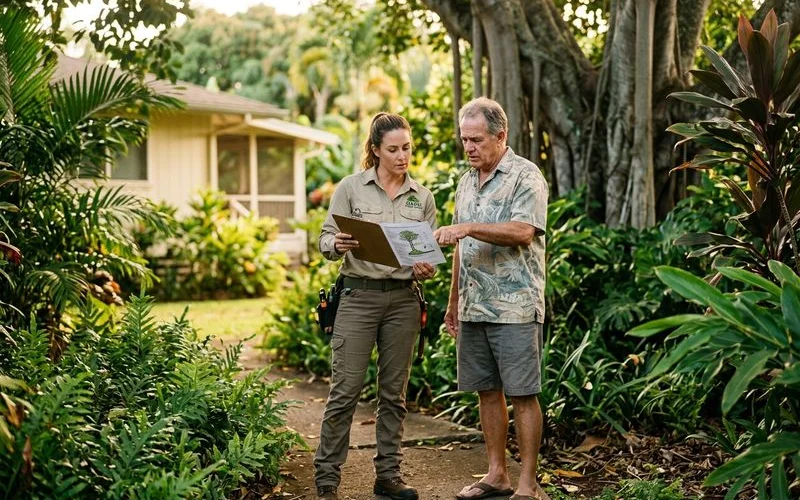
The ISA maintains a public online registry where you can instantly verify any certification number. You simply ask for the arborist’s full name and credential number to check their active status.
Our company always provides active credential numbers in our initial proposals. Legitimate professionals provide this documentation willingly.
Red Flags to Avoid
You must watch out for deceptive language from uncertified operators.
- Vague claims like “we have arborists on staff” usually mean the person quoting the job is not certified.
- An expired ID card is a major warning sign.
- Arborists lose their active status if they miss their required 60 continuing education units.
Always check the online registry to confirm their status is currently active.
Bottom Line
An ISA Certified Arborist is a trained tree care professional with verified knowledge. They understand tree biology, safe practices, and proper cutting techniques.
We know the credential doesn’t make every certified person excellent. It does filter out casual operators and provides a baseline standard you can trust.
For any non-trivial tree work, hiring an ISA-certified professional is the smart starting point. This is especially true for diagnosis, risk assessment, or large tree pruning and removal.
Check their tree professional credentials today to ensure your property remains safe and beautiful.
Common Questions
What does an ISA Certified Arborist do?
Why hire a certified arborist?
How do I verify someone is ISA Certified?
Related Guides
Tree Preservation Planning for Construction Projects
Construction near mature trees needs a preservation plan. Root-zone protection, tree protection zones, and post-construction care explained.
Tree Risk Assessment: What to Expect
What happens during a professional tree risk assessment — inspection, documentation, risk rating, and recommendations. When to schedule one.
Need expert help on this?
Learn more about Arborist Consultation & Plant Health
See our Arborist Consults service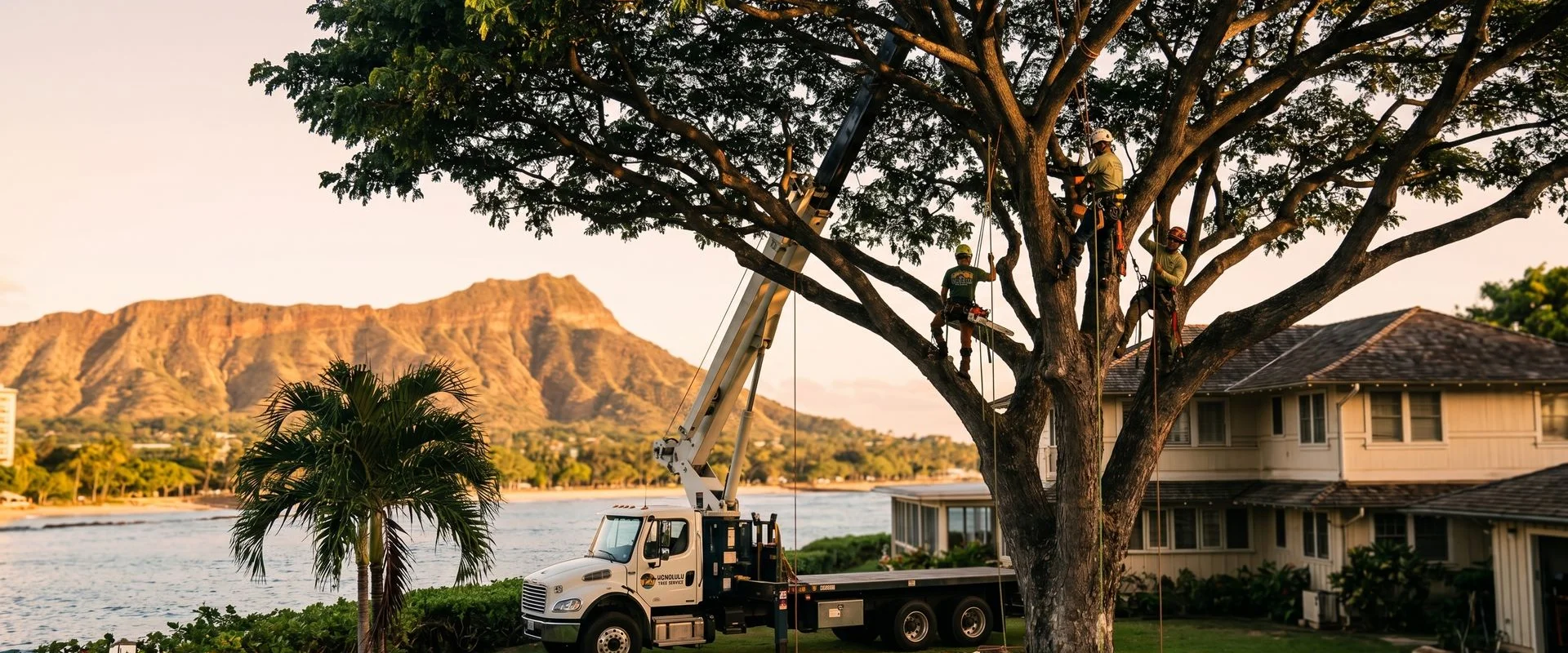
Ready for Expert Tree Care on Oahu?
ISA-certified arborists, transparent pricing, and 24/7 emergency response. Get a free on-site quote today.