
Will Tree Removal Damage My Yard?
How professional crews protect lawns, hardscape, and structures during tree removal on Oahu — what to expect, what's covered, and what to ask.
· 5 min read
The Honest Answer
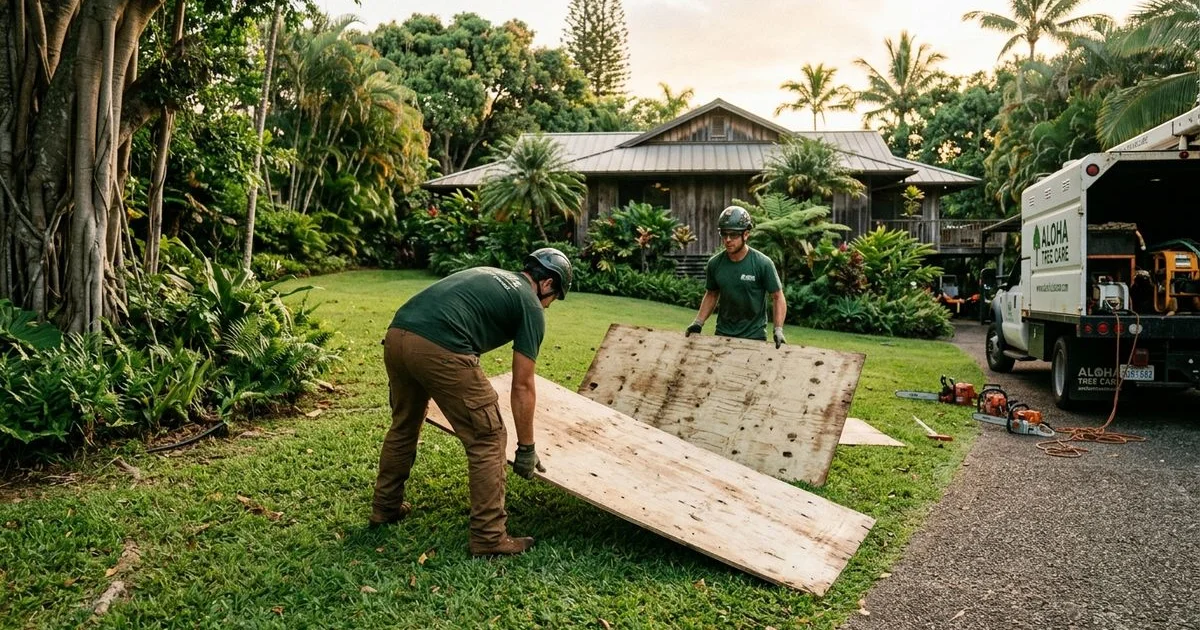
Will tree removal damage my yard? We hear this question every day. The honest answer is that minor yard impact is unavoidable, but severe damage is entirely preventable.
A heavy truck on grass or a crane setting up on a lawn will leave marks.
The difference between normal wear and real destruction comes down to how the crew prepares. Our standard procedure always includes rigorous property protection.
A professional tree removal leaves your yard tired but recoverable. You might see some flat grass where the crane sat, but nothing that will not bounce back quickly. Careless crews leave deep ruts, broken hardscape, and ruined plantings.
How Professionals Protect Your Yard
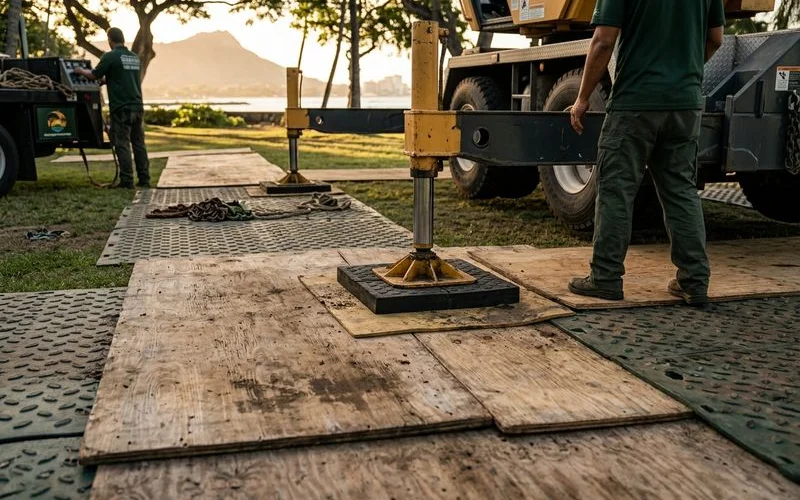
Professionals protect your yard by using specialized equipment to distribute weight and control falling debris.
Ground Protection Mats
We rely on heavy-duty mats to keep your property intact. Specialized composite mats, like AlturnaMats, handle up to 120 tons of weight without crushing the soil underneath. These panels easily support a 20,000-pound bucket truck. Our crews lay these down over high-traffic paths to prevent deep ruts in your grass. Any contractor skipping this step is simply cutting corners.
Strategic Staging
Proper staging prevents chaos and minimizes the time heavy equipment sits on your turf. An experienced arborist maps out the property before a single chain saw starts. We plan staging areas that specifically route 15,000-pound chipper trucks away from delicate root zones. This approach avoids underground sprinkler lines and decorative hardscaping. Our planning process adheres to US national safety standards for residential tree care. Strategic parking drastically reduces overall lawn traffic.
Controlled Rigging
Careful rigging keeps heavy logs from turning into destructive projectiles. A 100-pound log dropping just 30 feet hits the ground with thousands of pounds of force. We use specialized friction devices, like a Port-A-Wrap, to handle these massive sections. These tools allow climbers to lower heavy wood safely on ropes to a designated landing zone. Our arborists use this controlled technique to protect what sits underneath the canopy. Lowering wood slowly prevents compacted soil and shattered irrigation pipes.
Crane for the Right Jobs
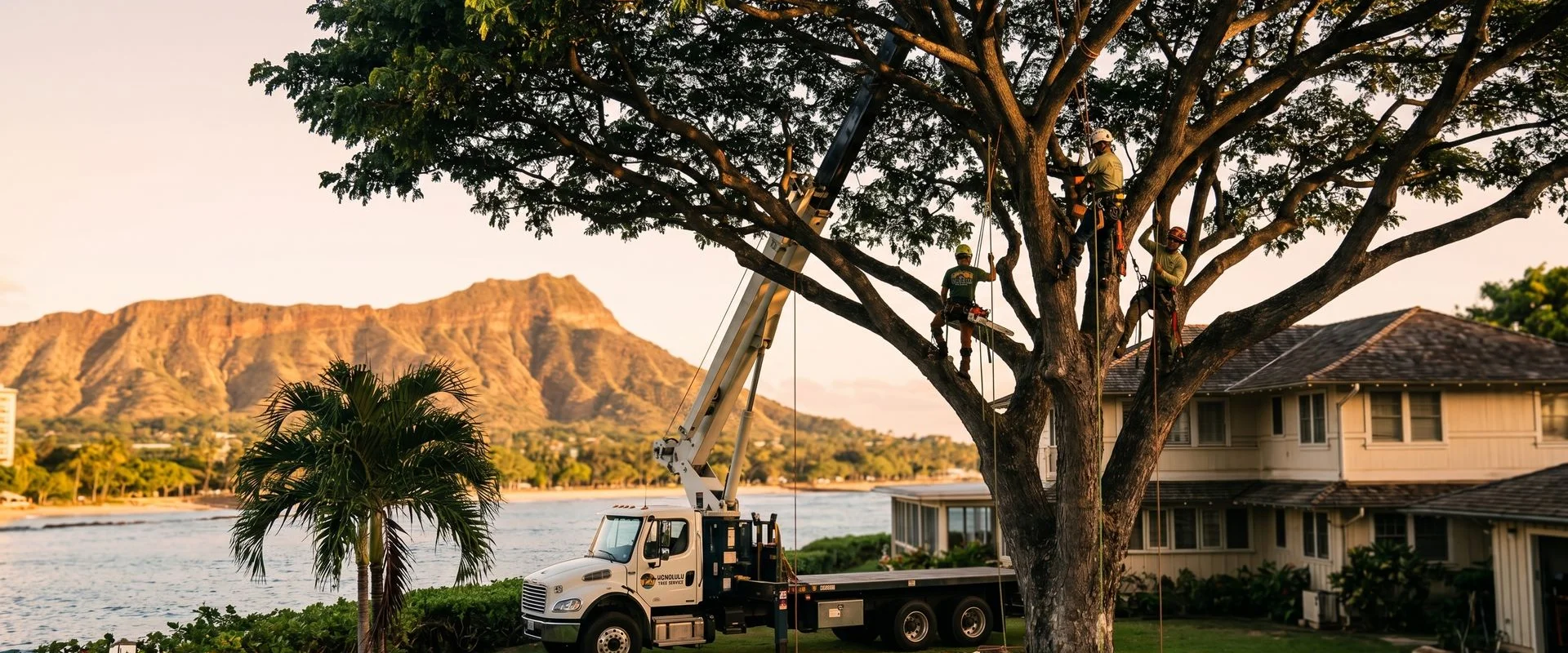
A crane is often the safest solution for oversized trees or tight residential lots. Using a standard 30-ton or 40-ton tree crane lifts sections away from the property entirely. We recommend crane access because it drastically reduces the time workers spend dragging debris across your yard. The upfront cost might be slightly higher for crane services. Our clients find that the near-zero impact on their landscaping saves money on repairs later. Heavy sections never even touch your grass.
Cleanup as Part of the Job
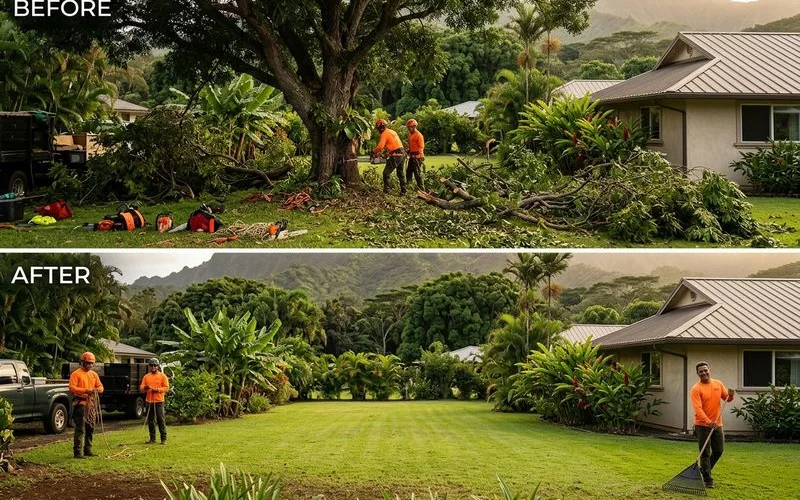
Thorough cleanup is the final, essential step in a professional job. A standard mature oak can produce five to ten cubic yards of woodchips and debris. We rake the entire work area, haul the brush, and blow off all hard surfaces. You can also ask the crew to leave the chips as backfill for the stump hole. Our standard practice ensures most light compaction recovers within two to four weeks with normal watering. A company that leaves missed branches or broken sprinklers is failing at the job.
What to Ask Before the Crew Arrives
You must ask contractors to detail their specific property protection plan before work begins. Reputable companies will happily outline their exact methods and equipment. We always provide written answers to these critical questions. Vague promises to be careful are not enough.
- What is the specific staging plan? Ask where the 15,000-pound chipper truck will park and where the crew will pile the brush.
- What ground protection do you use? Specify AlturnaMats, heavy plywood, or composite panels.
- What is the rigging plan for the tree? Listen for specific terms like ropes, friction devices, or lowering blocks.
- Are sprinklers and property lines flagged? Verify that they call 811 for underground utilities before grinding stumps.
- Do you carry adequate liability insurance? Require proof of at least $1 million to $2 million in general liability coverage for property damage.
What Normal Marks Look Like (and How to Recover)
Normal marks are superficial indentations and scattered sawdust that recover quickly. Your yard will look a little tired immediately after the heavy equipment leaves. We advise homeowners to expect a few temporary aesthetic changes. These minor issues bounce back with basic seasonal maintenance.
- Flat or matted grass: Grass blades crush under equipment tires. Cool-season grasses like Kentucky Bluegrass or Tall Fescue usually spring back in two to four weeks with regular watering.
- Minor surface compaction: The weight of crane outriggers temporarily presses the topsoil down. Aerate the specific area if it looks slow to recover after 30 days.
- Scattered sawdust and small woodchips: Even careful cleanup leaves trace amounts of sawdust. A quick raking spreads it out, and the next rain washes it into the soil.
- A bare soil patch: Stump grinding leaves an empty void in the lawn. Add one to two inches of fresh topsoil and reseed the area when the weather cools down.
None of that constitutes actual property damage. Our teams consider these marks part of normal operational wear. A healthy US lawn easily recovers from this temporary stress.
What Real Damage Looks Like
Real damage involves broken infrastructure or deep soil disturbances that require professional repairs. You should watch for clear signs of destruction that go beyond flat grass. We recommend walking the entire property as soon as the crew finishes. Look for these specific red flags:
- Deep ruts tearing through the root zone from truck tires
- Shattered sprinkler heads (which average $150 to $300 to repair)
- Cracked driveway pavers or sunken concrete sidewalks
- Crushed fencing, damaged sheds, or broken planter boxes
- Torn limbs on neighboring plants outside the active work zone
Legitimate tree service operations carry insurance specifically for these accidents. Our standard policy covers any unintended structural impacts. You should document any issues with date-stamped photos immediately. Bring the damage to the foreman’s attention before they drive away from the site.
Bottom Line
Professional tree service property protection ensures your landscape remains intact. Tree removal on a residential lot does not ruin a properly protected yard. We know some grass will be flat, but those marks always recover. Real destruction only happens when crews skip ground protection and ignore basic safety standards. Our advice is to ask the tough questions and verify insurance minimums before booking. This simple diligence up front guarantees a safe and smooth project.
Common Questions
Will removing a tree damage my lawn?
Do you clean up after removal?
What if something gets damaged anyway?
Related Guides
Do You Need a Permit to Remove a Tree in Honolulu?
Honolulu tree-removal permits explained — Exceptional Trees, protected species, and what the City & County requires before any work begins.
Emergency & Storm-Damaged Tree Removal
What to do when a tree falls or splits in a storm — safety steps, when to call for emergency response, and what 24/7 dispatch looks like on Oahu.
How Much Does Tree Removal Cost in Honolulu?
Tree removal cost breakdown for Honolulu — what drives pricing, typical ranges by size, when a crane changes the number, and how to get an accurate quote.
Large Tree Removal with a Crane
When crane-assisted tree removal is the right call — large trees, tight lots, near-line work, and what the process looks like on Oahu.
Ready for Expert Tree Care on Oahu?
ISA-certified arborists, transparent pricing, and 24/7 emergency response. Get a free on-site quote today.