
Are Falling Coconuts a Liability for Hawaii Property Owners?
Property-owner liability from falling coconuts in Hawaii — what foreseeable hazard means, what insurance expects, and how documented maintenance protects you.
· 5 min read
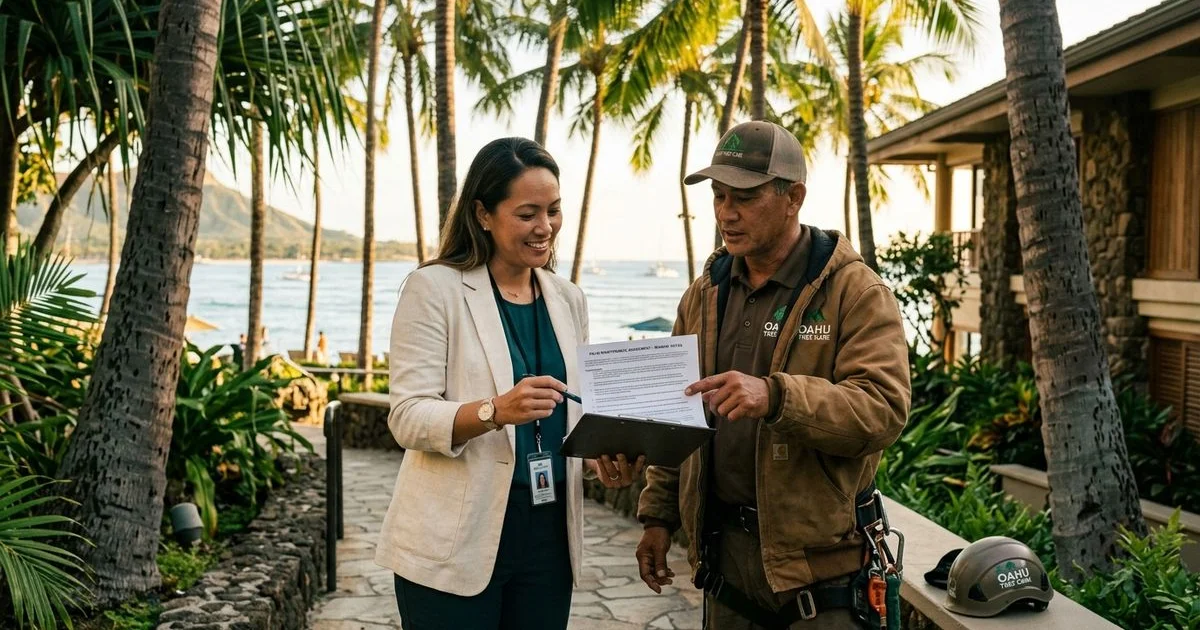
We know that property management often feels like a constant battle against hidden threats.
Invisible pipe leaks and electrical faults usually keep owners awake at night.
A mature coconut palm dropping heavy fruit on a walkway is a completely different story.
Our routine palm tree services help property owners eliminate this specific overhead risk.
Let us look at the details of falling coconut liability in Hawaii and the exact documentation required to protect your assets.
The Legal Frame
Under standard premises liability principles, property owners owe a duty of reasonable care to people on their land. This mandate establishes basic property owner palm responsibility, which includes identifying and managing foreseeable hazards.
We see this exact legal standard applied to broken stairs or icy walkways across the country. The famous “Hawaii Rule”, established in state cases like Whitesell v. Houlton, provides clear guidance on tropical vegetation. Living trees officially become a legal nuisance when they pose an imminent danger of actual harm to others.
Our risk management partners frequently highlight the concept of constructive notice. A plaintiff only needs to prove that a property owner should have known about the danger. Visible coconuts hanging forty feet over a public sidewalk easily satisfy this requirement. Unmanaged palms create an immediate risk of an injury claim if a heavy seed pod falls and causes harm.
The core rule of constructive notice is simple. If a reasonable person can look up and see the hazard, the property owner is legally accountable for managing it.
Scheduled coconut removal is the only reliable way to discharge your duty of reasonable care. We recommend establishing a documented service routine for both residential and commercial properties. This proactive approach stops lawsuits before they can begin.
Who Has the Most Exposure
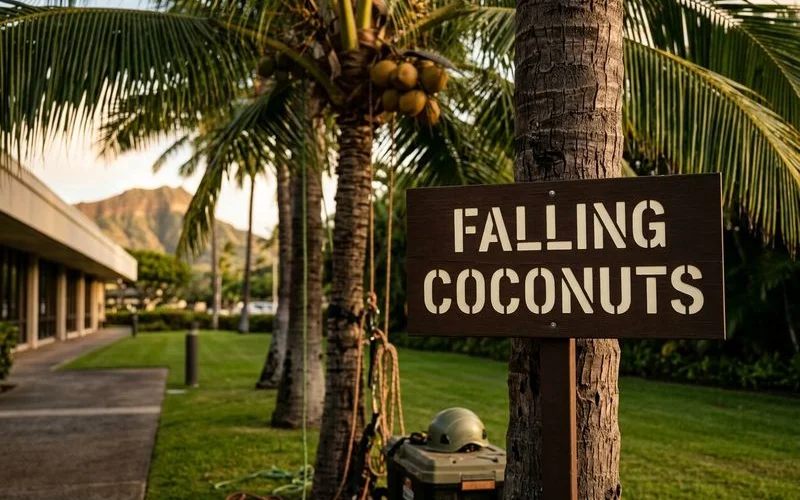
Commercial and residential properties carry vastly different levels of liability risk. A falling coconut can weigh up to four pounds and cause catastrophic damage. We categorize property exposure into three distinct threat levels based on daily foot traffic.
| Risk Level | Property Type | Primary Liability Exposure |
|---|---|---|
| High | Hotels, resorts, restaurants | Guests walking, sitting, or dining under palm canopies. |
| Medium | HOAs, schools, public buildings | Residents and visitors using courtyards, pools, and parking lots. |
| Low | Single-family homeowners | Neighbors and guests using driveways or border walkways. |
Hotels and commercial landlords face the highest exposure because they invite the public onto their premises for business. Schools and condo associations share a similar burden in their common areas. Our commercial clients prioritize this maintenance because a single accident can trigger a massive lawsuit.
Residential homeowners face the smallest exposure, but the risk remains active. A historic Hawaii legal case resulted in a $39,000 payout to a police officer injured by a falling coconut on duty.
We advise all homeowners to check their lot boundaries carefully. Coconuts dropping onto a neighbor’s parked car will still produce a costly insurance claim.
What “Foreseeable Hazard” Means in Practice
Plaintiffs typically must prove four specific elements for an injury claim to succeed in court. The injured party must show the hazard existed, the owner knew about it, the owner failed to act, and this failure caused the harm. We constantly remind clients that unmanaged coconut palms tick all four of these legal boxes.
- The Hazard Exists: Ripe coconuts are heavy, dense objects suspended at dangerous heights.
- Constructive Knowledge: Coconuts take up to twelve months to mature, making the hazard visible for a very long time.
- Failure to Manage: Lacking a receipt for scheduled tree service proves the owner ignored the risk.
- Direct Causation: Gravity proves that the coconut fell directly from the specific tree in question.
Documented maintenance flips this legal analysis entirely in your favor. The owner proves they took reasonable steps by hiring a professional. Our crews remove the danger long before the fruit fully ripens.
Any unexpected failure then becomes much harder to pin on the property owner. Recent 2026 pricing data from HomeGuide shows that palm tree trimming in Hawaii averages between $120 and $800 per tree. We believe this modest maintenance cost is the best legal defense you can buy.
What Insurance Carriers Look For
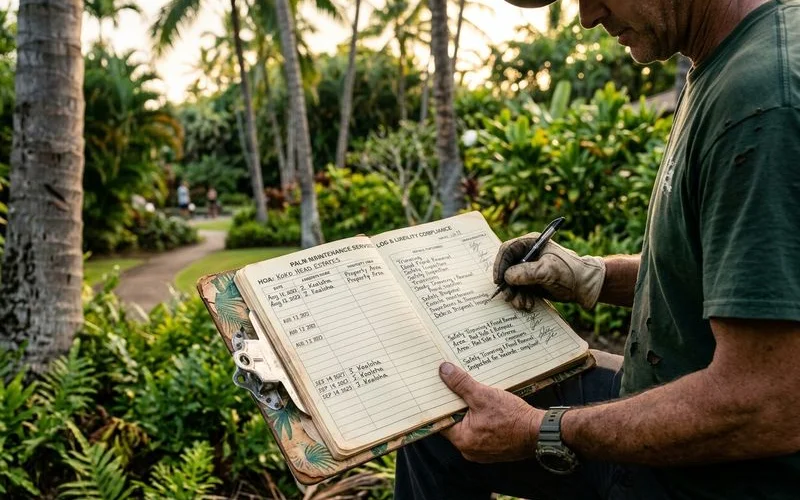
Property insurance and commercial liability carriers demand strict evidence of routine maintenance after an incident occurs. Adjusters will immediately ask for your paper trail. Our team works directly with insurance brokers to ensure your paperwork meets industry standards.
- Written Service Contracts: Carriers want to see an ongoing agreement rather than a one-time emergency invoice.
- Dated Service Records: Each visit must produce an invoice and a detailed summary of the work performed.
- Qualified Provider Proof: The contractor needs active licensing, liability coverage, and an ISA (International Society of Arboriculture) certification.
- Photographic Evidence: Clear notes and photos documenting the cleaned crown provide undeniable proof of service.
Many commercial policies tied to the Insurance Services Office (ISO) general liability form make this documentation a strict condition of coverage. Carriers operating in hurricane-prone zones often require specific windstorm endorsements that mandate regular tree pruning.
We highly suggest reviewing your specific policy requirements with your broker this week.
What a Documentation Package Looks Like
Building a solid defense file is a straightforward process for most property managers. Modern landscaping professionals use software like Arborgold or TreePlotter to generate digital, timestamped records automatically. Our administrative staff compiles these exact items into a secure file for every client.
Essential File Components
First, you need a written agreement specifying a clear schedule and the exact scope of work. A quarterly schedule covering coconut removal, frond trimming, and seed pod extraction is the industry standard. We always include the contractor license number and insurance details right on the contract front page.
Every site visit must generate a dated invoice and a brief service summary. Optional before-and-after photos of the palm crown add massive legal protection at zero additional cost.
Our certified arborists conduct an annual review to confirm the trimming schedule still matches the property risk profile. The total cost of this package is tiny compared to a single liability settlement. Protection compounds year over year when you maintain a pristine digital record.
HOA and Condo Specifics
Condominium associations face additional layers of governance and state regulation. Hawaii Revised Statutes Chapter 514B strictly outlines the maintenance duties of a condo board. We help association boards meet these complex legal requirements every single day.
Scheduled contracts reduce coconut liability for HOAs while protecting the association from outside injury claims. Proper documentation also shields board members from internal lawsuits regarding negligent management.
Directors and Officers Protection
Board members have a strict fiduciary duty to maintain common areas safely. Ignoring a dangerous tree can be viewed as a breach of this exact duty. Our consolidated billing and per-palm service records help boards prove their diligence.
Directors and Officers liability coverage might even deny a claim if the board cannot show proof of routine maintenance. Most HOAs run quarterly schedules to ensure compliance and peace of mind. We structure these programs to fit within standard annual landscaping budgets.
Bottom Line
Proactive coconut removal is essential risk management if your property has palms over any area where people walk or drive. The financial cost of a scheduled tree service is a fraction of a single personal injury claim.
We know that documented service records significantly reduce your legal exposure in Hawaii. For HOAs and commercial property managers, handling palm tree liability on Oahu is simply the standard cost of doing business.
Check your tree canopies today and schedule an inspection to keep your property totally secure.
Common Questions
Are property owners liable for falling coconuts?
Do you offer commercial palm contracts?
What documentation do I need?
Related Guides
Coconut Removal for Safety: Why It's Required
Falling coconuts cause injuries and property damage every year on Oahu. Why proactive removal matters for homeowners, HOAs, and commercial properties.
Common Palm Tree Diseases in Hawaii
Lethal yellowing, fungal trunk rot, nutrient deficiency, and pest damage. The common palm issues on Oahu and what can be done about each.
How Often Should Palm Trees Be Trimmed?
Palm trimming frequency depends on species, exposure, and use of the property. Recommended schedules for Oahu residential, coastal, and commercial palms.
Palm Skinning vs Palm Trimming
Palm skinning and palm trimming are two different services. What each does, when each is appropriate, and how to ask for the right one.
Ready for Expert Tree Care on Oahu?
ISA-certified arborists, transparent pricing, and 24/7 emergency response. Get a free on-site quote today.