Common Palm Tree Diseases in Hawaii
Lethal yellowing, fungal trunk rot, nutrient deficiency, and pest damage. The common palm issues on Oahu and what can be done about each.
· 6 min read
Why Palms Get Sick
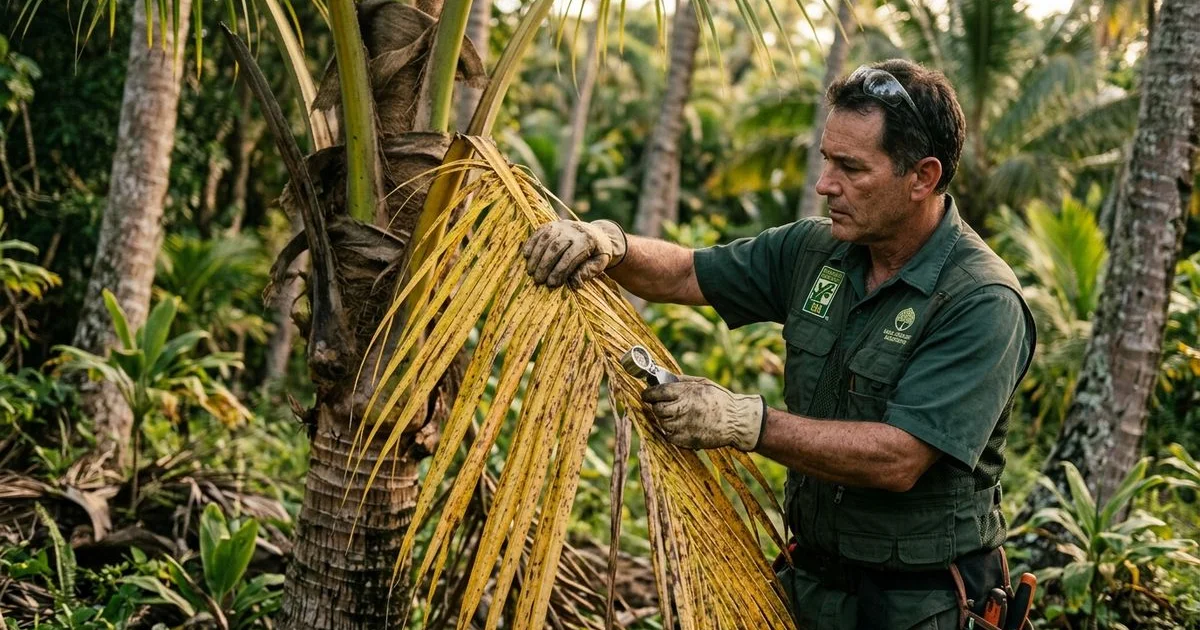
We see a lot of sick palm trees in Hawaii, and the root cause is usually a combination of high humidity, coastal salt exposure, and improper maintenance. These environmental stressors make palms highly vulnerable to fungal rot, lethal yellowing, nutrient deficiencies, and invasive pests, which is why ongoing palm tree services matter so much on Oahu.
Recognizing the early warning signs of these issues is the difference between saving a valuable landscape asset and paying for an expensive removal.
Our team uses this guide to show you exactly what these specific problems look like and how they behave in our local climate. Proper treatment always requires an ISA-certified arborist, but understanding these symptoms gives property managers a head start.
The following sections outline the specific warning signs, the latest data on local pests, and actionable steps to protect your trees.
Lethal Yellowing
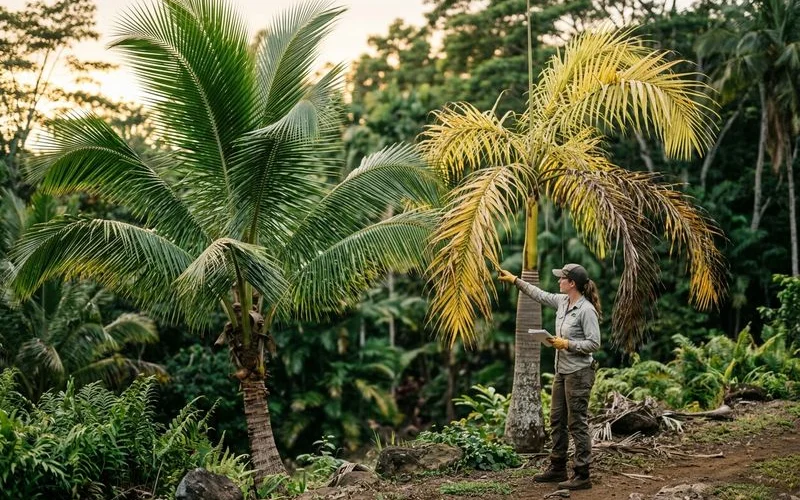
We identify lethal yellowing as a fatal phytoplasma disease transmitted by the planthopper insect that rapidly kills coconut and other palm species. Once infected, a tree typically dies within three to six months without immediate intervention. This aggressive disease causes severe agricultural and economic damage across tropical regions.
What it is: Our specialists track this bacterial-like infection as it spreads through the palm’s vascular system. The disease chokes off water and nutrient flow, causing systematic starvation. A tiny insect vector called the planthopper spreads the phytoplasma from tree to tree.
Symptoms: We look for a very specific progression of visual cues during a property inspection. A definitive diagnosis requires observing how the canopy changes over time. The warning signs typically appear in this exact order:
- Premature dropping of coconuts at all stages of development
- Discoloration of inflorescences, turning black instead of golden
- Progressive palm yellowing starting with older lower leaves
- Eventual collapse of the spear, or the newest central frond
- Complete death of the palm within 3 to 6 months of symptom onset
Can it be saved? Our certified arborists can sometimes save a tree with oxytetracycline antibiotic injections if the disease is caught in the earliest possible stages. Most cases are diagnosed far too late for any successful chemical treatment. Removing an infected palm immediately is the most effective way to protect neighboring trees from the planthopper.
Prevention: We strongly recommend planting resistant palm cultivars because no permanent cure exists. Varieties like the Malayan Dwarf show high resistance to the phytoplasma. Routine monitoring and prompt removal of affected palms remain the standard defense strategy.
Fungal Trunk Rot
We see fungal trunk rot as one of the most devastating issues for mature palms in Hawaii. Various fungi colonize the trunk tissue through wounds caused by improper trimming or severe weather events. These infections weaken the structural integrity of the tree over several years.
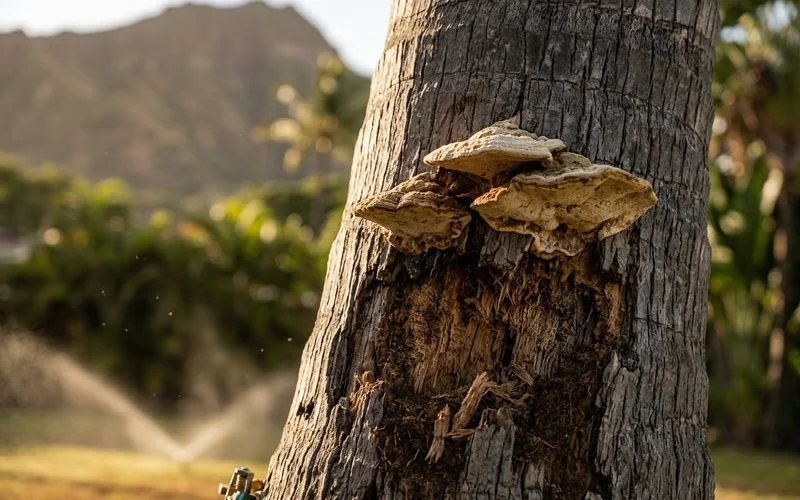
What it is: Our team encounters Ganoderma zonatum, a highly aggressive fungus, frequently during residential inspections. This white rot macrofungus specifically degrades the woody tissue inside the lower five feet of the palm. The infection hollows out the trunk while leaving the outer bark looking surprisingly normal for months.
Symptoms: We use several specific indicators to diagnose a fungal infection before the tree falls. Internal decay can be silent, but a few external clues give it away. The following signs indicate a serious problem:
- Fungal conks, or white circular shelf-like fruiting bodies, on the lower trunk
- Soft, decayed, or hollow-sounding areas near the base
- Cracking or active oozing on the trunk surface
- Wilting fronds that do not respond to adequate watering
- Eventual and sudden structural failure of the entire tree
Can it be saved? Our arborists know that a Ganoderma infection is completely fatal once the fruiting conks appear on the trunk. The tree must be removed immediately to prevent millions of fungal spores from spreading to nearby palms. Other less aggressive rots might respond to targeted fungicide treatments and improved soil care.
Prevention: We emphasize proper trimming practices to avoid creating the wounds that invite fungal spores. Over-cutting fronds or using climbing spikes leaves deep cuts in the bark. Sanitizing saws and loppers with a bleach solution between trees stops the artificial spread of the disease.
Nutrient Deficiencies
We diagnose nutrient deficiencies in palms more often than any infectious disease on the islands. Hawaii’s highly porous volcanic and coralline soils frequently wash away essential elements before the roots can absorb them. A lack of potassium, magnesium, or manganese causes distinct visual changes in the foliage.
What it is: Our soil analysis often reveals that standard landscape fertilizers do not provide the specific micronutrients palms require. Palms are heavy feeders that need a precise balance to maintain a strong, green canopy. Providing the wrong type of nitrogen can actually force new growth that the tree cannot support, worsening the deficiency.
Symptoms: We look for very specific color patterns on the leaves to determine exactly which nutrient is missing. The location of the yellowing tells a clear story. The most common indicators include:
- Potassium deficiency: Yellowing or browning on older fronds, while the newer growth higher in the crown remains green.
- Magnesium deficiency: Broad yellowing on lower fronds with a distinct, healthy green band running along the center of the leaflet.
- Manganese deficiency: This causes “frizzle top,” where newer fronds emerge small, deformed, and badly discolored.
Can it be fixed? We correct these imbalances by applying targeted soil amendments mixed for the specific deficiency. Improvement is a slow process that takes several months to a year. The tree will only look healthy again once completely new fronds replace the deficient ones.
Prevention: We recommend using a specialized slow-release fertilizer with an 8-2-12-4 N-P-K-Mg ratio to prevent these issues. This specific formula provides the high potassium and magnesium levels palms desperately need. Annual feeding keeps the root zone stocked with the correct micronutrients.
Rhinoceros Beetle Damage
We consider the Coconut Rhinoceros Beetle (CRB) to be the most critical pest threatening Hawaii’s palms right now. This invasive insect bores directly into the crowns of mature trees to feed on the nutrient-rich sap. While coconuts can sometimes survive an attack, the endemic Loulu palm faces rapid mortality from these beetles.
What it is: Our field teams track these large, black beetles as they move across the islands. Originally detected on Oahu in 2013, the entire island is now considered an infested containment zone. The adult beetles cause the visible damage, but they breed in decaying organic matter like mulch and compost piles.
Symptoms: We inspect the newest growth at the top of the canopy for the signature signs of a CRB infestation. The beetles leave behind highly distinct patterns that are easy to spot. The primary indicators include:
- Symmetrical, V-shaped or triangular cuts in newly emerging fronds
- Visible bore holes near the crown of the tree
- Frass, which is a sawdust-like material, accumulating at the bore holes
- Ragged or shredded leaf edges on the upper canopy
Can it be saved? We can save damaged coconut palms with timely chemical treatments and aggressive monitoring. Repeated attacks will severely weaken the tree and invite secondary fungal infections. A severely damaged Loulu palm often cannot recover and requires prompt removal.
Prevention: Our preventative protocols focus on eliminating the breeding habitats near the trees. Removing green waste, securing compost, and following local compliance orders regarding mulch transport stops the reproductive cycle. Professional trap deployment and regular inspections provide the best defense for properties in active CRB zones.
When to Call an Arborist
We urge property managers to schedule a professional evaluation the moment structural or color changes appear. Early diagnosis provides the highest chance of saving a mature tree from a fatal decline. Waiting to see if the problem resolves itself usually guarantees an expensive removal.
Critical Warning Signs: Our arborists recommend regular visual inspections of your property’s canopy. A quick walk around the yard can reveal issues before they become catastrophic. Call a professional immediately if you notice:
- Sudden yellowing of multiple fronds at the same time
- Fronds dropping prematurely before they have completely died
- Unexplained dropping of coconuts on a tree that previously held fruit to maturity
- White fungal conks emerging anywhere along the trunk
- Distinct V-shaped cuts in the newest emerging fronds
- A central spear frond that collapses or pulls out easily by hand
- Soft, rotting, or oozing patches on the lower bark
We prioritize rapid response times for these specific symptoms. An accurate diagnosis allows for targeted fungicide, antibiotic, or nutritional applications. A late diagnosis almost always means the tree has structural damage and must come down for safety reasons.
Why DIY Treatment Often Fails
We frequently see the devastating results of well-intentioned DIY palm treatments gone wrong. Generic plant fertilizers, broad-spectrum insecticides, and internet home remedies almost always miss the actual root cause of the disease. The wrong chemical application can actually accelerate a tree’s decline while wasting your money.
The Risks of Guesswork: Our experience shows that treating a potassium deficiency with a standard lawn fertilizer will force new growth and make the yellowing worse. Spraying a random insecticide might kill beneficial pollinators while completely missing the planthoppers spreading lethal yellowing. A proper recovery plan requires knowing exactly which pathogen or pest is attacking the plant.
The Value of Expertise: We provide a comprehensive 30-minute on-site consultation to eliminate this guesswork entirely. A thorough inspection delivers a precise diagnosis, a clear recommendation, and a targeted treatment plan. The actual cost of a misdiagnosis for a palm disease in Oahu is the total loss of a valuable landscape asset.
Bottom Line
We know that palm tree diseases in Hawaii follow highly predictable patterns across Oahu and the neighboring islands. Understanding the four main threats of lethal yellowing, fungal rot, nutrient deficiency, and beetle damage gives you a distinct advantage.
Catching these warning signs early is the key to preserving your landscape.
We see that whether a sick palm tree can survive depends entirely on the specific problem and the speed of the response. Waiting for the tree to heal itself is never the correct strategy.
You need actionable data to make the right call for your property.
We encourage you to secure a professional diagnosis before making any decisions about chemical treatments or tree removal. A certified evaluation protects your investment and ensures the safety of your property.
Reach out to schedule an inspection today.
Common Questions
What diseases affect palms in Hawaii?
Can a diseased palm be saved?
How do I prevent palm diseases?
Related Guides
Are Falling Coconuts a Liability for Property Owners?
Property-owner liability from falling coconuts in Hawaii — what foreseeable hazard means, what insurance expects, and how documented maintenance protects you.
Coconut Removal for Safety: Why It's Required
Falling coconuts cause injuries and property damage every year on Oahu. Why proactive removal matters for homeowners, HOAs, and commercial properties.
How Often Should Palm Trees Be Trimmed?
Palm trimming frequency depends on species, exposure, and use of the property. Recommended schedules for Oahu residential, coastal, and commercial palms.
Palm Skinning vs Palm Trimming
Palm skinning and palm trimming are two different services. What each does, when each is appropriate, and how to ask for the right one.
Ready for Expert Tree Care on Oahu?
ISA-certified arborists, transparent pricing, and 24/7 emergency response. Get a free on-site quote today.