
How Often Should Palm Trees Be Trimmed on Oahu?
Palm trimming frequency depends on species, exposure, and use of the property. Recommended schedules for Oahu residential, coastal, and commercial palms.
· 5 min read
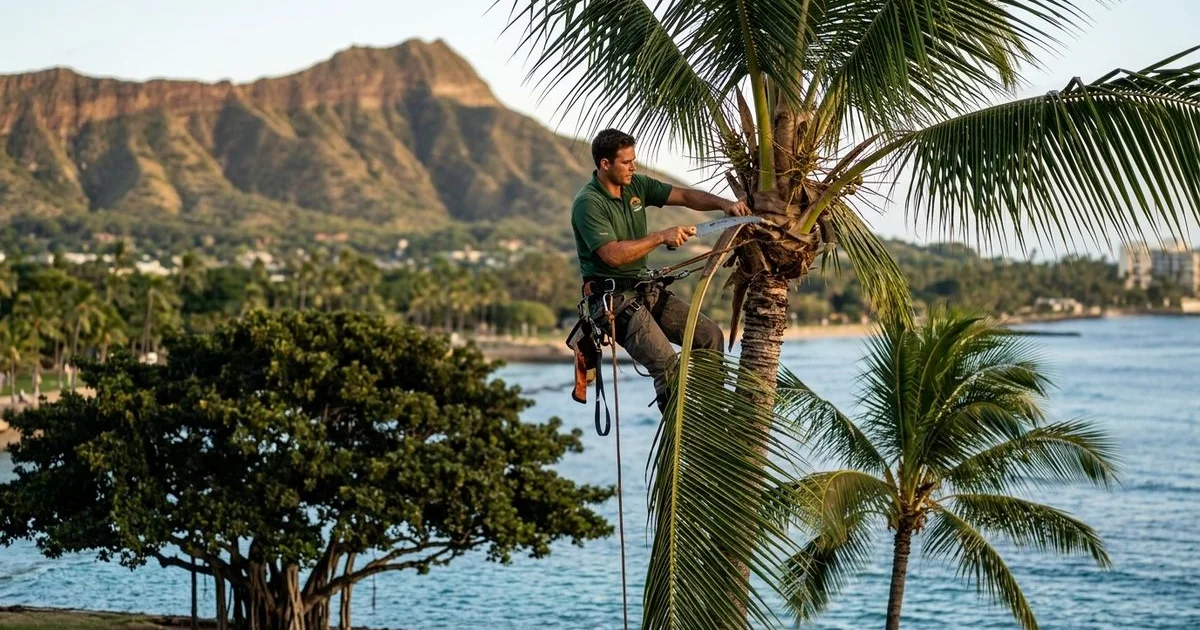
Many property owners treat palm maintenance as a casual chore until a heavy coconut damages a vehicle or a roof. We see this reactive approach happen entirely too often across the island. The reality is that knowing exactly how often to trim palm trees protects both your property value and the safety of everyone on your grounds.
Let’s look at the data, what it actually tells us, and explore practical ways to respond.
How Often to Trim Palm Trees: A Schedule, Not a Calendar Event
Palm trimming runs on a biological clock rather than a seasonal calendar. We have learned that palms thrive on a frequent, light maintenance routine. Stretching the time between visits leads to overgrown canopies that require aggressive, stressful cuts.
The right interval depends heavily on your specific property layout and the palm’s location. Our palm tree services follow proven Oahu-specific schedules to prevent costly over-pruning.
Local data from 2026 shows that routine trimming costs around $100 to $500 per tree, while emergency correction trims often exceed $800.
Sticking to a proactive routine keeps your landscape looking pristine and your maintenance budget predictable.
Recommended Schedules by Property Type
Standard Residential Palms
Every 6 months.
Two visits per year cover the needs of most standard residential yard palms. We recommend this baseline palm maintenance Oahu schedule for typical inland neighborhoods. Each visit removes dead fronds, heavy seed pods, and maturing coconuts.
Healthy green fronds remain intact to provide essential nutrients to the tree. The City of Honolulu follows this exact six-month interval for public royal and coconut palms to maintain a safe environment.
Coastal Residential
Every 4 months.
Salt spray, high winds, and accelerated frond decay create a harsher environment for oceanfront properties in Hawaii Kai, Lanikai, and Portlock. We tighten the schedule here to compensate for these aggressive coastal elements.
Frequent trade winds can easily dislodge dying fronds and create dangerous debris zones in your yard.
Maintaining a four-month rotation catches these weak points before a strong gust brings them down unexpectedly.
HOA and Multi-Unit Properties
Quarterly.
Homeowners associations require consistent aesthetics and strict liability management. We service these large-scale properties four times a year to ensure a uniform appearance across every single unit.
Quarterly visits provide essential benefits for associations:
- Removes maturing coconuts before they reach their heavy five-pound drop weight
- Maintains a uniform, pristine appearance across all member units
- Creates a documented paper trail that protects the board from negligence claims
Resort, Hotel, and Restaurant
Quarterly minimum.
Aesthetic perfection and dense foot traffic drive much shorter maintenance intervals for commercial hospitality spaces. We often maintain high-end Oahu resorts on a strict two-month or three-month rotation.
Guests expect a flawless tropical backdrop without the visual clutter of dying brown leaves. Frequent light pruning guarantees that the canopy always looks fresh while keeping walkways totally clear of falling seed pods.
High-Risk Properties (over parking, walkways, pool decks)
Every 3 months.
Palms positioned directly over parking lots, pedestrian walkways, or pool decks demand constant vigilance. We advise clients to never stretch the interval beyond three months in these high-risk zones.
The removal cycle must remain shorter than the time it takes for a coconut to fully mature. A three-month schedule completely eliminates the chance of heavy fruit developing and dropping onto a parked car or a lounge chair.
What “Trimming” Includes
The Standard Pruning Process
A proper palm trimming visit focuses strictly on removing hazards and dead weight. We follow safe arboriculture standards to ensure your tree stays healthy and resilient.
Here is what a professional service visit actually includes:
- Dead and dying fronds that appear brown, drooping, or excessively dry
- Dead frond stubs and old frond bases to clean up the trunk profile
- Heavy coconut clusters and immature coconuts before they become a falling risk
- Seed pods and inflorescences that drain energy from the plant
- Old, decaying frond material that invites pests

Harmful Practices to Avoid
Certain aggressive cutting methods permanently damage the trunk and invite fatal fungal diseases. Our crews completely avoid these harmful shortcuts that inexperienced landscapers often attempt.
A proper visit does not include the following damaging actions:
- Removing healthy green fronds just to make the tree look neat
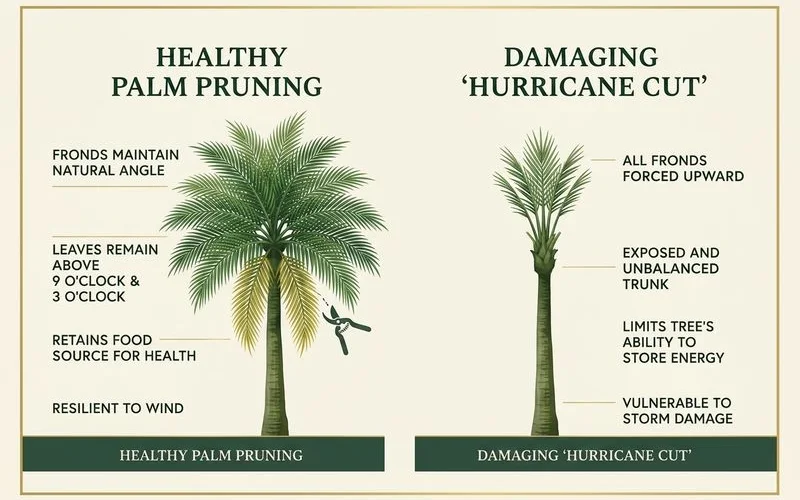
- Cutting fronds above the horizontal line in a dangerous practice known as the hurricane cut
- Spurring up healthy trunks with climbing spikes that create permanent, open wounds
Green, healthy fronds act as the primary food factory for the palm. We regularly see trees suffer from stunted growth or fatal Thielaviopsis trunk rot because an amateur removed too much living tissue. Over-pruning starves the plant, and full recovery can take several years.
Why More Frequent Is Better Than Less Frequent
Biological Alignment
Palms continuously push out new growth from the center crown while shedding older leaves from the bottom. We match our service schedule to this natural biological cycle to maximize plant health.
Trimming on a predictable rotation provides several immediate benefits:
- Removes dead material before it breaks loose and falls unexpectedly
- Keeps the canopy clean without ever requiring heavy, stressful intervention
- Avoids the temptation to over-trim just because a crew is already on-site
Pest and Disease Prevention
Frequent visits allow arborists to spot early warning signs of trouble before they become fatal. Our technicians actively inspect the upper crown for pests during every single routine trim.
The Coconut Rhinoceros Beetle continues to pose a severe threat across Oahu in 2026. Spotting the chewed, V-shaped cuts of early beetle damage gives you a much better chance to save the tree and prevent the infestation from spreading.
Long-Term Cost Savings
Routine maintenance requires less labor per visit because there is simply less material to cut and haul away. We consistently find that skipping visits actually drives up the total cost of landscape care.
Waiting two years instead of six months creates a massive, overgrown canopy that demands an aggressive correction trim. This heavy intervention stresses the palm, increases disposal fees, and often costs double or triple the price of a standard visit.
Species-Specific Notes
Different varieties of palms require slightly different management strategies. We customize the approach based on how each specific type grows and sheds its leaves.
A thorough initial inspection identifies the exact species on your property and establishes the safest, most effective palm trimming schedule Hawaii offers.
| Palm Species | Typical Trimming Interval | Primary Maintenance Focus | Key Safety Consideration |
|---|---|---|---|
| Coconut Palm | Every 6 months | Fruit and heavy pod removal | Maturing nuts weigh up to 5 lbs and pose severe drop hazards |
| Royal Palm | Every 6 to 12 months | Dead frond removal | Massive dying fronds can weigh 30 to 50 lbs when they fall |
| Date Palm | Varies by fruit cycle | Seed pod extraction | Heavy seed pods must be trimmed before dropping naturally |
| Foxtail Palm | Mostly cosmetic | Clean shedding management | Self-cleaning trunk requires very little invasive cutting |
| Manila Palm | Every 6 to 12 months | Cosmetic shaping | Small stature makes ground-level maintenance easier |
Self-cleaning varieties like the Foxtail drop their old leaves cleanly and rarely need canopy thinning. We focus mostly on hazard reduction for the heavier, fruit-bearing types.
Bottom Line
Palms thrive on a frequent, light pruning schedule that matches the specific demands of the property. We strongly advise treating tree care as an ongoing biological necessity rather than a sporadic cleanup project.
Residential yards generally need attention every six months, while coastal homes require a four-month cycle. High-traffic commercial centers and HOAs should stick to a strict three-month to four-month rotation.
Aggressive, infrequent cutting permanently damages the trunk and is vastly worse for the plant than leaving it completely untouched. Understanding how often to trim palm trees prevents costly damage and keeps your tropical landscape healthy year-round. Secure a reliable schedule with a licensed professional to protect your property.
Common Questions
How often should palm trees be trimmed?
Can over-trimming hurt a palm?
What's a 'hurricane cut' and why is it bad?
Related Guides
Are Falling Coconuts a Liability for Property Owners?
Property-owner liability from falling coconuts in Hawaii — what foreseeable hazard means, what insurance expects, and how documented maintenance protects you.
Coconut Removal for Safety: Why It's Required
Falling coconuts cause injuries and property damage every year on Oahu. Why proactive removal matters for homeowners, HOAs, and commercial properties.
Common Palm Tree Diseases in Hawaii
Lethal yellowing, fungal trunk rot, nutrient deficiency, and pest damage. The common palm issues on Oahu and what can be done about each.
Palm Skinning vs Palm Trimming
Palm skinning and palm trimming are two different services. What each does, when each is appropriate, and how to ask for the right one.
Ready for Expert Tree Care on Oahu?
ISA-certified arborists, transparent pricing, and 24/7 emergency response. Get a free on-site quote today.