
Palm Skinning vs Palm Trimming: What's the Difference?
Palm skinning and palm trimming are two different services. What each does, when each is appropriate, and how to ask for the right one.
· 5 min read
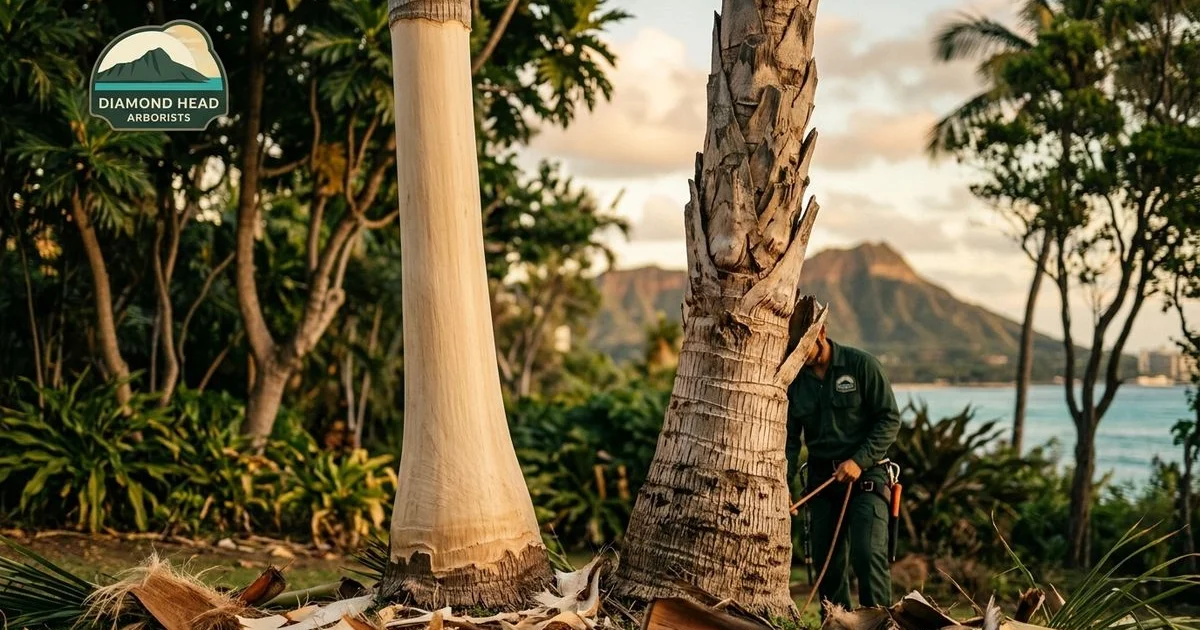
Two Different Services for Different Parts of the Palm
We notice property owners often use “trimming” as a catch-all term for any palm maintenance. This common mix-up leads to confusion about pricing and the actual work performed.
Understanding the difference between palm skinning vs trimming clarifies exactly what your trees need.
The distinction completely changes the scope of work and the final bill.
If you are scheduling palm tree services, knowing these terms helps you protect your landscaping investment. Having palm trimming explained by a professional ensures you avoid paying for cosmetic work when a tree just needs safety maintenance.
Our team will break down these two procedures, examine the 2026 cost data, and outline how to choose the right service.
Palm Trimming
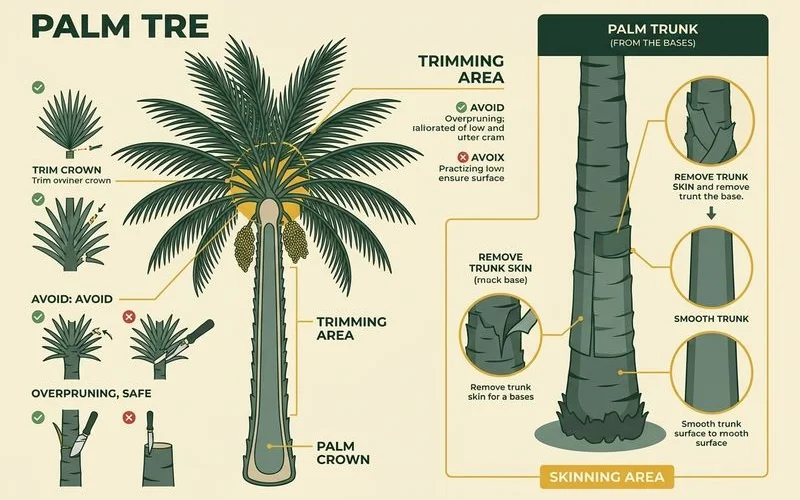
Palm trimming focuses entirely on the upper crown of the tree by clearing out dead fronds, seed pods, and coconuts. This routine maintenance prevents hazards and keeps the canopy healthy.
We consider this service non-negotiable for property safety. Mature coconuts can weigh several pounds and drop from heights up to 100 feet.
A falling coconut generates enough force to crush a car roof or cause severe head trauma.
Our crews follow the Hawaii Department of Agriculture guidelines, which recommend pruning at least twice a year in developed areas. Regular clearing eliminates these fall-zone risks completely.
What it is: Removing dead and dying fronds, seed pods, and coconuts from the palm crown. The crown is the top section where the living fronds grow.
Where it happens: The crown, located strictly above the trunk.
What it does:
- Removes safety hazards before they drop unexpectedly.
- Keeps the canopy clean and the palm looking maintained.
- Reduces pest and disease vectors within the upper fronds.
- Improves the palm’s appearance and structural balance.
When to ask for it:
- Routine maintenance is due (every 4-6 months for most palms).
- Coconut removal is necessary for family and property safety.
- Pre-storm tidying is needed before high winds arrive.
- The palm looks messy with brown, hanging fronds.
Cost and Frequency: Expect to pay between $75 and $125 for a short palm under 15 feet. Tall palms ranging from 30 to 60 feet typically cost between $225 and $400 to trim in 2026. Most Oahu palms require trimming every 4-6 months, while coastal and commercial properties schedule quarterly visits.
Palm Skinning
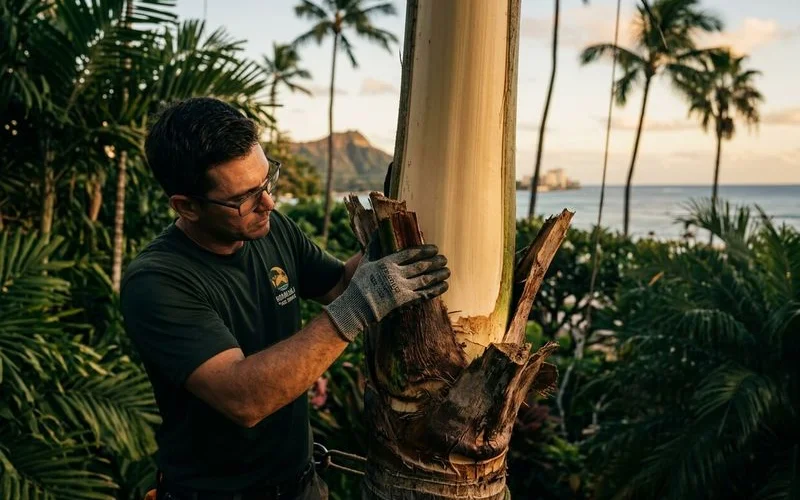
Palm skinning involves shaving away the old, dried frond bases from the tree trunk. This purely cosmetic procedure creates a smooth, polished look below the crown.
We often get requests for this service from high-end resorts and homeowners wanting a premium landscape. Removing these leftover “boots” eliminates prime nesting habitats for rodents, scorpions, and insects.
Our typical pricing for skinning adds an extra $50 to $100 per tree on top of standard trimming costs. You pay for the detailed labor required to shave the trunk safely without cutting into live tissue.
What it is: Removing the old, dried frond bases from the trunk of the palm. These remnants are left behind when fronds fell off years ago.
Where it happens: The trunk, located strictly below the crown.
What it does:
- Reveals a clean, smooth trunk surface.
- Improves the palm’s aesthetic profile significantly.
- Highlights the natural texture of species like royal and foxtail palms.
- Eliminates hiding spots for pests like rats and spiders.
When to ask for it:
- Aesthetic goals are a priority for premium properties.
- Managing palm species that specifically benefit from a clean trunk.
- Old frond bases look cluttered and detract from curb appeal.
Frequency: Skinning is an “as needed” service, usually performed once a year or less. Once a palm is skinned, it stays clean for many months before new boots build up.
Which Palms Need Skinning?
Only specific varieties retain their old frond bases long enough to require manual skinning. Some palms shed their debris naturally, leaving a smooth trunk with nothing to remove.
We perform a quick inspection to determine if your specific trees will benefit from this service. When scheduling palm skinning, Hawaii property managers often request this for older coconut specimens to improve the look of the entire yard.
Often skinned:
- Coconut palm (older specimens that retain bases).
- Royal palm (to highlight the natural green and gray trunk).
- Canary Island Date Palm (often shaped into a “pineapple” base).
- Mexican Fan Palm (to remove thick, heavy skirts).
- Manila palm.
Rarely skinned:
- Bottle palm (naturally smooth).
- Self-cleaning palms like most Foxtails.
- Young palms lacking thick frond base buildup.
Our teams always check the tree species before recommending any trunk modifications. A quick assessment prevents you from paying for an unnecessary procedure.
Do You Need Both?
Most residential and commercial properties thrive with just routine trimming for safety and health. Skinning operates as an optional aesthetic add-on for locations wanting a resort-style appearance.
We highly recommend bundling both services into a single visit if your trees need a visual upgrade. This approach saves you the cost of a separate trip and equipment setup fee.
Our pricing models show that a standard debris hauling fee, which averages $50 per palm in 2026, covers all the waste from both the crown and the trunk at once.
A typical service rotation includes:
- Every 4-6 months: Trimming to remove dead fronds, seed pods, and heavy coconuts.
- Every 12-18 months: Skinning to shave down the trunk, if the species benefits from it.
You easily get a perfectly safe canopy and a beautiful trunk in one appointment.
Common Mistakes
The most damaging mistakes involve gouging the live trunk tissue and performing trunk work during high pest activity. Improper cuts weaken the tree structurally and create easy entry points for disease.
We see many do-it-yourself attempts that leave the tree vulnerable to invasive insects. The Coconut Rhinoceros Beetle remains a severe threat across Hawaii in 2026, aggressively targeting the heart of the palm.
Our local agricultural data confirms that fresh sap from careless trimming wounds attracts these beetles from up to two miles away.
Avoid these frequent errors:
- Going too deep during skinning: Removes live trunk tissue and creates permanent wounds.
- Ignoring pest pressure seasons: Open cuts attract the Coconut Rhinoceros Beetle and palm weevils.
- Using climbing spikes: Spikes puncture the trunk, leaving permanent holes that never heal.
- Trimming as a substitute for skinning: The crown looks fine, but the trunk stays cluttered with boots.
- Skinning as a substitute for trimming: The trunk looks clean, but the crown remains full of heavy dead fronds.
They are completely different services. Doing one does not replace the need for the other.
Bottom Line
Choosing between palm skinning vs trimming comes down to safety versus aesthetics. Palm trimming handles the crown to eliminate falling hazards like heavy coconuts and dead fronds.
Palm skinning focuses purely on the trunk to remove old frond bases for a sleek, clean profile.
Most palms require regular trimming, while only specific species benefit from trunk skinning. We can help you create a proper care plan for your specific trees.
A quick inspection tells you exactly which service applies to your property. Contact our team today to schedule an evaluation and keep your landscape safe.
Common Questions
What is palm skinning?
Do all palms need skinning?
Can skinning hurt the palm?
Related Guides
Are Falling Coconuts a Liability for Property Owners?
Property-owner liability from falling coconuts in Hawaii — what foreseeable hazard means, what insurance expects, and how documented maintenance protects you.
Coconut Removal for Safety: Why It's Required
Falling coconuts cause injuries and property damage every year on Oahu. Why proactive removal matters for homeowners, HOAs, and commercial properties.
Common Palm Tree Diseases in Hawaii
Lethal yellowing, fungal trunk rot, nutrient deficiency, and pest damage. The common palm issues on Oahu and what can be done about each.
How Often Should Palm Trees Be Trimmed?
Palm trimming frequency depends on species, exposure, and use of the property. Recommended schedules for Oahu residential, coastal, and commercial palms.
Ready for Expert Tree Care on Oahu?
ISA-certified arborists, transparent pricing, and 24/7 emergency response. Get a free on-site quote today.