
Coconut Removal for Safety: Why It's Required
Falling coconuts cause injuries and property damage every year on Oahu. Why proactive removal matters for homeowners, HOAs, and commercial properties.
· 5 min read
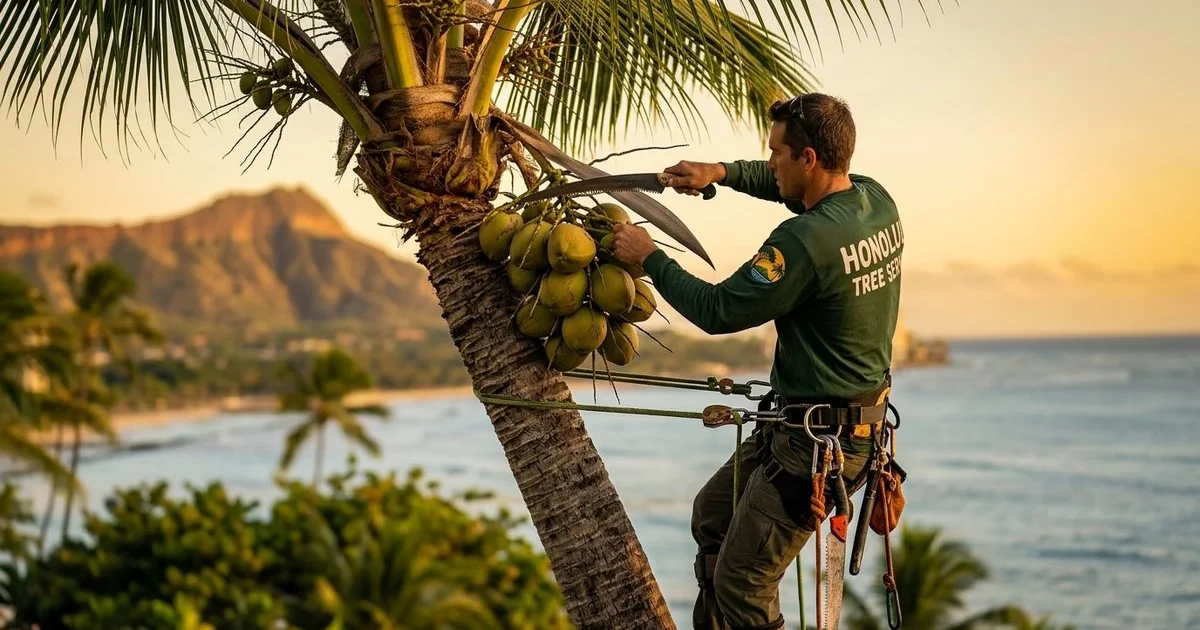
The Real Risk
Managing tropical landscapes always brings a specific set of safety challenges. Sourcing reliable coconut removal Oahu property owners can depend on remains a critical part of landscape management. Our team balances these exact property risks every single day.
A mature coconut weighing up to 8.8 pounds dropping from 30 to 60 feet generates enough kinetic energy to instantly crack tile roofs or destroy windshields.
We constantly see owners facing expensive claims because they underestimated this threat. Let’s look at the specific legal liabilities attached to these palms, the required maintenance schedules, and the safest removal methods. Prioritizing falling coconuts safety provides a clear roadmap for protecting your assets.
Who’s Most at Risk
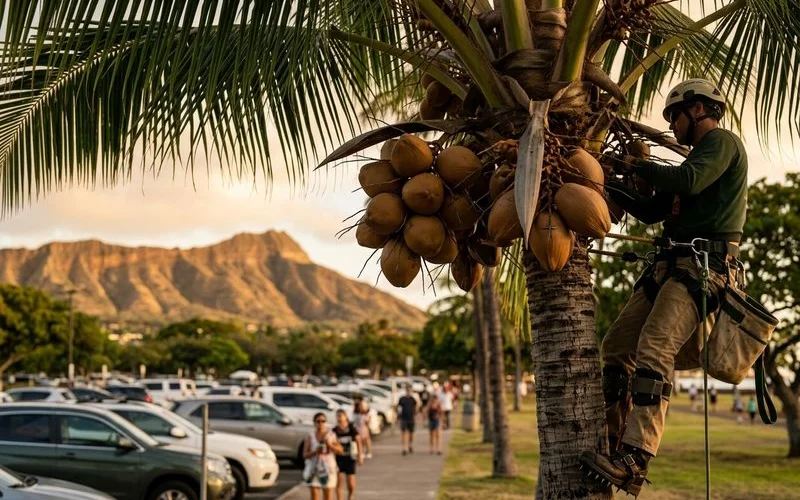
Any property where people or vehicles sit beneath mature palm trees faces immediate hazards. Hawaii premises liability laws hold owners strictly accountable for ignoring foreseeable dangers on their land. Our crews handle this specific legal exposure for both residential and commercial clients across the island.
You can effectively manage this hazard by utilizing scheduled palm tree services before an accident occurs. Certain environments carry a significantly higher exposure to dropping fruit incidents. Our arborists highly recommend immediate inspections for the following locations.
- Beachfront and oceanfront homes in Hawaii Kai, Lanikai, and Diamond Head with mature palms near patios, lanais, and parking pads.
- Resorts and hotels managing high foot traffic under palm-lined walkways.
- Restaurants and bars offering outdoor seating under unmanaged canopies.
- HOAs maintaining shared trees in common areas, parking lots, or near pools.
- Schools, churches, and public buildings dealing with courtyard hazards.
How Coconut Removal Works
Professional removal relies on specialized climbing techniques to safely reach the crown. A trained arborist extracts the heavy fruit, dead fronds, and bulky seed pods during a single visit. Our climbers use advanced friction knots and Buckingham saddles instead of harmful spikes.
Climbing spurs leave permanent trunk wounds that invite diseases and destructive pests. A typical residential palm requires 30 to 60 minutes to completely clear. We coordinate resort and commercial properties into efficient service routes to clear dozens of trees in a single morning.
For efficient coconut removal Honolulu processing facilities like Hawaiian Earth Products recycle all the resulting green waste. Complete site cleanup always remains part of the standard service. Our clients appreciate the pristine condition of their grounds after we leave.
| Climbing Method | Equipment Used | Trunk Impact | Long-Term Health |
|---|---|---|---|
| Safe Technique | Friction knots, saddles | None | Excellent |
| Unsafe Technique | Climbing spurs, spikes | Deep puncture wounds | High risk of disease |
Schedule by Property Type
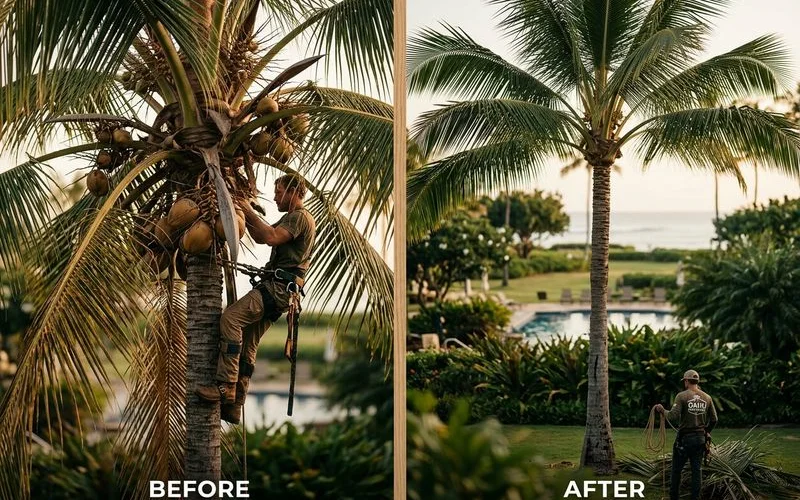
A proper maintenance schedule eliminates the hazard before the fruit ripens and falls. Coconuts take 12 months to fully mature, but local palms produce up to 12 new harvests per year. Our scheduling system aligns exactly with this continuous growth cycle to prevent heavy drops.
Waiting to call after a heavy nut hits the ground puts your entire property at risk. Different coastal microclimates dictate specific service intervals. We use these standard rotations to keep properties compliant.
- Standard residential: every 6 months. Two visits a year covers most typical growth rates.
- Coastal residential / oceanfront: every 4 months. Heavy salt and high wind speed up the hazard cycle.
- HOAs and condos with shared palms: quarterly, often integrated into broader landscape maintenance contracts.
- Resorts, hotels, and restaurants: quarterly, with increased frequency during peak production seasons.
- High-risk properties (trees directly over parking, walkways, pool decks): every 3 months minimum.
Liability and Insurance
Documented maintenance provides the absolute simplest defense against coconut palm liability lawsuits. Property owners face massive legal battles when unmanaged fruit causes a severe injury. Our detailed service records provide the exact paper trail that insurance carriers demand.
A consistent schedule proves you took reasonable steps to eliminate known hazards. Commercial landlords and HOA boards specifically rely on this proof to maintain their coverage. We automatically generate these crucial reports after every single visit.
- Written service contracts showing a regular, enforced schedule.
- Detailed service records and invoices for each completed visit.
- Clear photos of trimmed crowns after every single service.
Why Skinning and Trimming Often Go With It
Bundling fruit removal with frond trimming saves money and destroys dangerous pest habitats. The dark crown of an unkempt palm provides an ideal nesting ground for Hawaii’s invasive roof rats and centipedes. Our service visits eliminate these exact hiding spots by stripping away the dead organic matter.
Clearing the dried inflorescence and decaying leaves keeps rodents completely away from your rooflines. Most comprehensive visits include a few critical cleanup steps. We ensure every palm looks pristine and remains perfectly healthy.
- Coconut and immature fruit cluster removal.
- Dead frond and heavy branch trimming.
- Seed pod and inflorescence (flower stalk) extraction.
- Optional palm skinning (cosmetic removal of old bases from the trunk).
Bottom Line
Securing routine coconut removal Oahu wide stands as a mandatory safety obligation for any property with mature trees. The cost of a standard 4 to 6 month maintenance rotation is drastically lower than a single property damage lawsuit.
Our documented maintenance plans deliver absolute peace of mind and strict liability protection.
Reach out today to schedule your site inspection and keep your grounds completely safe.
Common Questions
Why should coconuts be removed from palms?
How often should coconuts be removed?
Can I remove the coconuts myself?
Related Guides
Are Falling Coconuts a Liability for Property Owners?
Property-owner liability from falling coconuts in Hawaii — what foreseeable hazard means, what insurance expects, and how documented maintenance protects you.
Common Palm Tree Diseases in Hawaii
Lethal yellowing, fungal trunk rot, nutrient deficiency, and pest damage. The common palm issues on Oahu and what can be done about each.
How Often Should Palm Trees Be Trimmed?
Palm trimming frequency depends on species, exposure, and use of the property. Recommended schedules for Oahu residential, coastal, and commercial palms.
Palm Skinning vs Palm Trimming
Palm skinning and palm trimming are two different services. What each does, when each is appropriate, and how to ask for the right one.
Ready for Expert Tree Care on Oahu?
ISA-certified arborists, transparent pricing, and 24/7 emergency response. Get a free on-site quote today.